Fact-checked by the The Insurance Scout editorial team
Quick Answer
Usage-based car insurance (UBI) rewards safe drivers with discounts averaging 10%–40% by tracking speed, braking, and mileage via an app or plug-in device. As of July 2025, programs from Progressive, State Farm, and Allstate are available in most U.S. states. Low-mileage and careful drivers save the most; high-risk drivers may see rates rise.
Usage-based car insurance is a pricing model where your premium reflects how you actually drive — not just your age or ZIP code. According to Insurance Information Institute data, over 20 million U.S. drivers are currently enrolled in some form of UBI program, a figure that has more than doubled since 2015.
Rising premiums have made UBI newly attractive in 2025. If you’re already paying more than you think you should, this model may finally tip the math in your favor.
How Does Usage-Based Car Insurance Work?
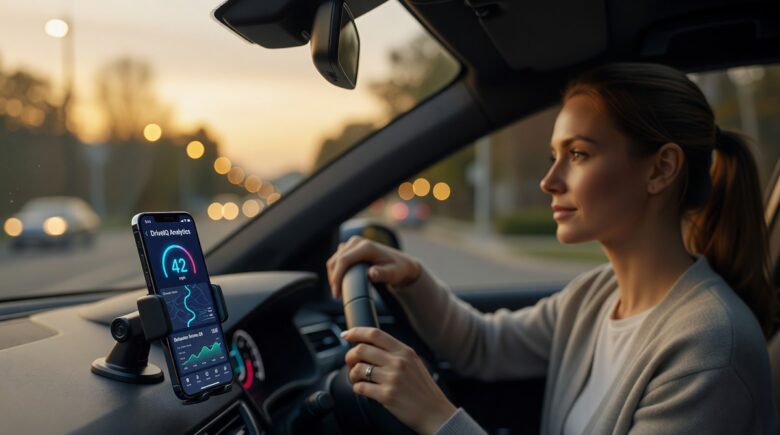
Usage-based car insurance collects driving data through a smartphone app or a small OBD-II plug-in device, then adjusts your rate based on real behavior. Insurers measure factors including miles driven, hard braking, rapid acceleration, cornering speed, and time of day.
There are two main program types. Pay-per-mile programs charge a base rate plus a per-mile fee — ideal for low-mileage drivers. Pay-how-you-drive programs score your behavior and apply a discount (or surcharge) at renewal.
Key Data Points Collected
- Miles driven per day or trip
- Hard-braking events (sudden stops)
- Rapid acceleration patterns
- Nighttime driving frequency (11 p.m. – 4 a.m. is high-risk)
- Phone distraction (detected via app permissions on some platforms)
Most programs run a monitoring period of 30–90 days before locking in your adjusted rate. Progressive’s Snapshot and State Farm’s Drive Safe & Save are among the most widely available, each using a mix of app and hardware tracking.
Key Takeaway: Usage-based car insurance tracks real driving behavior over a 30–90 day window using app or OBD-II data. Programs like Progressive Snapshot score speed, braking, and mileage to set your personalized rate at renewal.
How Much Can You Save With Usage-Based Car Insurance?
Savings vary widely by program and driver profile, but well-documented discounts range from 10% to 40% for safe, low-mileage drivers. Poor driving behavior, however, can result in a surcharge at renewal with certain programs.
According to Consumer Reports’ analysis of UBI programs, the average enrolled driver saves roughly $231 per year, but results differ sharply between program types. Pay-per-mile options like Metromile (now part of Lemonade) benefit drivers who log fewer than 8,000 miles annually the most.
Who Saves the Most?
- Remote workers or retirees driving under 8,000 miles per year
- Drivers who avoid late-night trips
- Commuters with short, predictable routes
- Young drivers willing to prove safe habits to offset age-based surcharges
High-mileage commuters or drivers with frequent hard-braking events may see minimal benefit — or a higher renewal quote. If a single at-fault accident can already raise your rate significantly, it’s worth understanding how at-fault accidents affect your auto insurance rate before enrolling.
Key Takeaway: Safe drivers save an average of $231 per year through usage-based car insurance, with discounts up to 40%. Drivers logging under 8,000 annual miles gain the most, per Consumer Reports’ UBI program analysis.
| Program | Insurer | Tracking Method | Max Discount | Surcharge Risk? |
|---|---|---|---|---|
| Snapshot | Progressive | App or plug-in device | Up to 30% | Yes (at renewal) |
| Drive Safe & Save | State Farm | App (OnStar optional) | Up to 30% | No surcharge |
| Drivewise | Allstate | App | Up to 40% | No surcharge |
| SmartRide | Nationwide | Plug-in device | Up to 40% | No surcharge |
| LightTrip (Lemonade) | Lemonade | App (pay-per-mile) | Varies by mileage | No surcharge |
What Are the Privacy Risks of Usage-Based Insurance?
The core trade-off with usage-based car insurance is straightforward: you share location and behavior data in exchange for a potential discount. The privacy implications deserve careful consideration before you enroll.
Insurers collect GPS routes, driving timestamps, and behavioral scores. Some programs, like Progressive Snapshot, explicitly state they do not use GPS location — only speed and braking via the OBD-II port. Others, including app-based programs, do capture location data. The Federal Trade Commission’s consumer privacy guidance advises reviewing each insurer’s data-sharing policy before consent.
What Happens to Your Data?
Most insurers state they do not sell raw driving data to third parties, but many reserve the right to share aggregated or de-identified data. Data could theoretically be subpoenaed in legal proceedings. If you’re also evaluating other policies, reviewing how insurance premiums and deductibles interact can help you weigh whether a UBI discount justifies the data exposure.
“Telematics data is arguably the most sensitive personal dataset an insurer can collect — it creates a time-stamped map of your daily life. Consumers should treat enrollment consent the same way they treat a financial disclosure.”
Key Takeaway: Usage-based car insurance programs vary significantly in privacy scope — some collect GPS routes while others capture only braking and speed. The FTC recommends reviewing data-sharing policies before enrolling, especially since at least 5 major insurers reserve rights to share aggregated telematics data.
Is Usage-Based Car Insurance Worth It for Your Profile?
Whether usage-based car insurance makes financial sense depends almost entirely on your driving profile and risk tolerance. Most drivers benefit, but a meaningful minority face higher rates after enrollment.
A J.D. Power 2023 U.S. Auto Insurance Study found that telematics program participants reported higher satisfaction scores than non-participants — but also noted that one in five drivers saw no meaningful savings after enrollment. For drivers comparing full coverage options, understanding the difference between liability vs. full coverage auto insurance is an equally important cost lever.
UBI Is Likely Worth It If You:
- Drive fewer than 10,000 miles per year
- Avoid driving between midnight and 5 a.m.
- Have a clean driving record for the past 3 years
- Are a young driver trying to offset age-based rating surcharges
UBI May Not Be Worth It If You:
- Commute long distances daily (over 15,000 miles per year)
- Frequently brake hard due to stop-and-go traffic (not personal fault, but still scored)
- Are enrolled with a program that applies surcharges, like Progressive Snapshot
- Have strong privacy concerns about location data retention
Rideshare drivers face a unique scenario — their commercial mileage is typically excluded from personal UBI programs. If that applies to you, see how rideshare auto insurance gaps could affect your total coverage picture.
Key Takeaway: Usage-based car insurance delivers real savings for drivers under 10,000 annual miles with clean records, but 1 in 5 enrolled drivers see no meaningful discount, per J.D. Power’s 2023 Auto Insurance Study. Surcharge-eligible programs require extra caution.
How Does Usage-Based Insurance Affect Your Policy Long-Term?
Enrollment in usage-based car insurance can influence your rates beyond the initial discount period — and not always in the direction you expect. Most programs re-evaluate your driving score at each renewal, meaning your discount can shrink or grow year over year.
Behavioral data may also become part of your insurer’s underwriting profile over time. Some insurers in states with fewer regulatory restrictions are beginning to incorporate telematics history into standard renewal pricing — even if you opt out of the UBI program later. Major life changes that affect your insurance needs, like moving cities or changing jobs, can shift your driving profile significantly; reviewing how to update insurance after a major life event is useful context here.
State insurance regulators, including those operating under NAIC (National Association of Insurance Commissioners) guidelines, are actively reviewing telematics oversight rules. As of 2025, several states including California have placed restrictions on how telematics data can be used in rate-setting — offering consumers stronger protections than the national baseline.
Key Takeaway: Telematics scores are increasingly embedded in standard renewal pricing, not just initial discounts. California and other states have enacted NAIC-aligned rules limiting telematics use, but NAIC’s UBI oversight framework still leaves significant variation across all 50 states.
Frequently Asked Questions
Can usage-based car insurance raise my rates?
Yes, with some programs. Progressive Snapshot is the most well-known example where poor driving scores can result in a rate increase at renewal. Programs from Allstate Drivewise and Nationwide SmartRide do not impose surcharges — they only offer discounts or no change.
Does usage-based insurance track my location?
It depends on the program. OBD-II plug-in devices like Progressive’s hardware dongle typically do not use GPS. App-based programs from State Farm and Allstate generally do collect location data. Always read the program’s privacy disclosure before enrolling.
Is pay-per-mile the same as usage-based car insurance?
Pay-per-mile is a subset of usage-based car insurance. It charges a base monthly rate plus a fixed cost per mile driven — typically $0.03 to $0.07 per mile. Standard UBI programs score driving behavior rather than mileage alone. Both models reward low-mileage drivers.
How long does the tracking period last?
Most programs have an initial monitoring period of 30 to 90 days, after which your discount is calculated. Some programs, like State Farm Drive Safe & Save, track continuously and recalculate at each six-month renewal. Ongoing tracking means your discount can improve over time.
What driving behaviors hurt your UBI score the most?
Hard braking events, rapid acceleration, and late-night driving (typically 11 p.m. to 4 a.m.) carry the heaviest penalties in most scoring models. High daily mileage and phone distraction are also penalized on app-based platforms that detect screen usage during trips.
Can I cancel a usage-based insurance program after enrolling?
Yes, most insurers allow you to opt out at any time. However, if you cancel before earning a discount, you revert to your standard rate. With surcharge-capable programs like Snapshot, canceling after a bad monitoring period may not reverse a rate increase already applied at renewal.
Sources
- Insurance Information Institute — Facts & Statistics: Usage-Based Auto Insurance
- Consumer Reports — Usage-Based Auto Insurance Programs
- J.D. Power — 2023 U.S. Auto Insurance Study
- Federal Trade Commission — Privacy and Security Guidance for Businesses
- National Association of Insurance Commissioners — Usage-Based Insurance Topic Overview
- Progressive — Snapshot Usage-Based Insurance Program
- California Department of Insurance — Telematics and Driving Data Consumer Guide