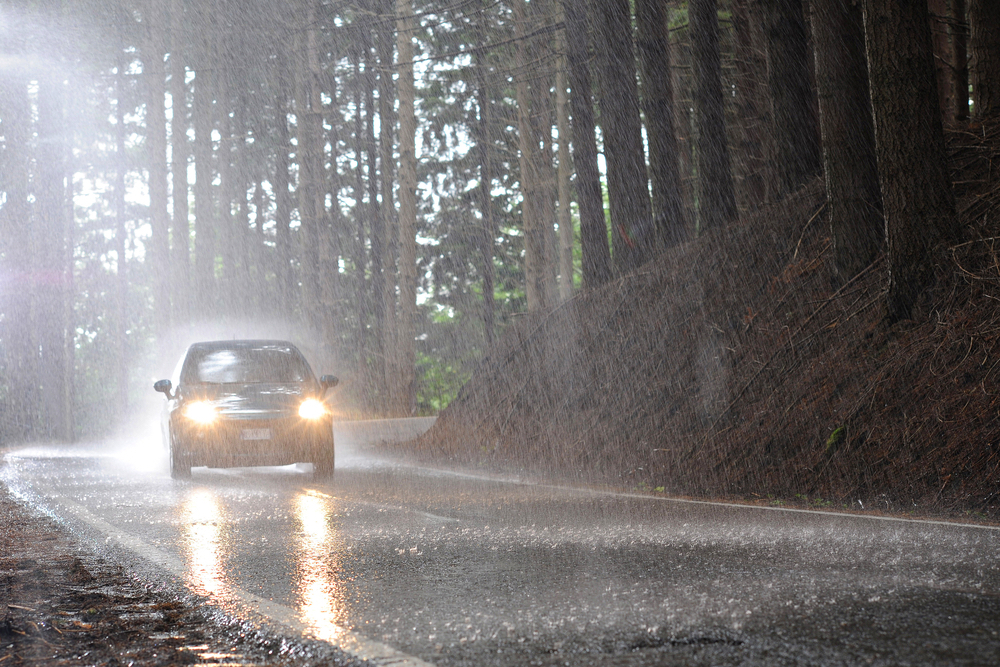
Quick Answer: How Do You Stay Safe Driving in the Rain?
To stay safe driving in the rain, slow down to at least 5–10 mph below the posted speed limit, turn on your headlights, avoid cruise control, and increase your following distance to at least 6 seconds. According to the Federal Highway Administration (FHWA), rain is responsible for more weather-related crashes than any other condition, accounting for 46% of all weather-related traffic fatalities.
Driving in the rain is more dangerous than driving during other conditions because you have to worry about other drivers who may not be paying attention, poor visibility, and slippery roads. So when it’s wet out, it’s important to be safe by paying attention and keeping yourself aware of what’s going on around you at all times. You should always review your car’s manual before traveling and make sure you have any necessary items such as an umbrella or a water repellant top. There is also a lot to know about the way rain affects visibility on the road, so it’s important to know what these are before driving. According to the Federal Highway Administration (FHWA), wet pavement contributes to nearly 1.2 million traffic crashes each year in the United States.
It’s important to note that rainy weather can make driving difficult for both manual and auto cars. But with these tips, you’ll be able to keep a level head and stay safe behind the wheel during inclement weather. Don’t worry – it’s all easy enough to remember and will get you through just about any rainstorm!
Key Takeaways
- Rain is a factor in nearly 1.2 million crashes per year in the U.S., according to the Federal Highway Administration.
- An average of 875 people are killed annually in rain-related accidents, and approximately 2.6 million people are injured, per NHTSA data.
- Wiper blades should be replaced every 6 months to maintain clear visibility — a standard recommendation from the AAA.
- Hydroplaning can begin at speeds as low as 35 mph on wet roads with worn tires, according to the National Highway Traffic Safety Administration (NHTSA).
- Rain accounts for 46% of all weather-related traffic fatalities, making it the deadliest weather condition for drivers, per the FHWA.
- Turning on your headlights in the rain is legally required in all 50 U.S. states when windshield wipers are in use, per individual state motor vehicle codes compiled by the Insurance Institute for Highway Safety (IIHS).
Check your windshield wipers
Visibility in the rain can be extremely limited and even treacherous. Raindrops on your windshield will reduce visibility because they can bounce light off the windshield and make it difficult to see. The wet asphalt on the road can also create this reflection when hit by light, which makes visibility even worse. When driving in the rain you’ll need to use your wipers, but not all wipers are created equal. Your wiper blades should be changed every 6 months at a minimum and replaced as soon as necessary to ensure you get a clear view of the road ahead of you, a standard maintained by the AAA’s automotive repair guidelines. Make sure you have some window cleaner in your car as well – you’ll need it to keep the windows clear of road grime after the rain has passed. The Consumer Reports windshield wiper testing program also recommends replacing blades at the first sign of streaking or skipping, regardless of how recently they were installed.
Worn wiper blades are one of the most overlooked safety hazards on the road. In moderate rain, a degraded wiper blade can reduce forward visibility by as much as 30%, which at highway speeds gives drivers almost no time to react to obstacles or sudden stops ahead of them.
says Dr. Patricia Holden, Ph.D., Senior Research Engineer at the AAA Foundation for Traffic Safety.
Ensure that all of your lights are working properly
You should also make sure your headlights work properly so that you can see in the rain, and other cars on the road can see you. It’s important to replace the headlight bulbs when necessary and to keep them clean so that they shine brightly on the pavement in front of you. The Insurance Institute for Highway Safety (IIHS) notes that properly functioning headlights are among the most critical safety features on any vehicle, particularly during wet weather. You should also keep your windshield clean inside and out in case of rain. Check that your turn signals and brake lights are working before driving on any wet roads. If they’re not, they could become damaged while you’re out on the road, making you an even bigger hazard to other drivers. Any dirt or grime on your windshield will cause unnecessary reflection and make visibility more difficult. The National Highway Traffic Safety Administration (NHTSA) reports that lighting defects are a contributing factor in thousands of nighttime and rainy-weather crashes annually. Lastly, if possible, try to keep your windows rolled down a bit, this will help with visibility and allow for a quicker drying time after a rainy trip.
| Driving Condition | Recommended Following Distance | Recommended Max Speed Reduction | Annual U.S. Crash Contribution |
|---|---|---|---|
| Dry Roads | 3 seconds | 0 mph (posted limit) | Baseline |
| Light Rain / Wet Roads | 6 seconds | 5–10 mph below limit | ~1.2 million crashes/year |
| Heavy Rain / Reduced Visibility | 8–10 seconds | 15–20 mph below limit | Included in 1.2M; 875 fatalities/year |
| Fog Combined with Rain | 10+ seconds | 20–25 mph below limit | ~38,700 crashes/year (fog-related) |
| Standing Water / Flooding | Do not enter if depth unknown | Full stop recommended | ~100 flood-related fatalities/year |
Keep your tires as full as possible
This is to avoid hydroplaning. Hydroplaning is when a car tire comes into contact with more water than it can disperse. The water pressure in front of the wheel pushes the water under the wheel. This reduces tire and road contact and increases the chances of an accident. According to the National Highway Traffic Safety Administration (NHTSA), hydroplaning can begin at speeds as low as 35 mph when tire tread depth falls below the recommended 2/32 of an inch minimum. Driving on low tire pressure won’t give you that much control over your vehicle, so keep those tires pumped up before hitting the road in heavy rain. The Tire Rack’s tire safety research also confirms that properly inflated tires with adequate tread depth are the single most effective defense against hydroplaning on wet roads.
Most drivers don’t realize that tire pressure drops naturally — roughly one PSI for every 10-degree drop in temperature. Heading into a rainy commute with underinflated tires significantly increases your stopping distance and makes hydroplaning far more likely, even at moderate speeds on a highway on-ramp.
says James R. Caldwell, P.E., Automotive Safety Engineer and Certified Member of the Society of Automotive Engineers (SAE International).
Be aware of how fog works
Occasionally when it rains, fog can roll in before or after the rain begins to fall. This is because rain tends to make the air cooler, which can cause fog to develop as it forms. The bad thing about foggy conditions is that it can be difficult to see other vehicles, so there’s additional room for error when driving. The National Weather Service (NWS) recommends using low-beam headlights — not high beams — during foggy conditions, since high beams reflect off fog and reduce visibility further. Fog combined with rain is responsible for an estimated 38,700 vehicle crashes each year in the United States, making situational awareness during these conditions especially critical.
Try to keep your speed low
You should drive slower, especially on wet roads, where the dampness makes them unsafe for any type of fast driving. When driving during heavy rainfall, stay in the lane that has the most traffic and make sure that you maintain a speed that is appropriate for conditions — the Federal Highway Administration (FHWA) recommends reducing your speed by at least 10 mph on wet roads and increasing your following distance to a minimum of 6 seconds. If you get in an accident, remember that you are insured. Staying focused on other vehicles while driving is easy because most motorists will see you before they see anything else. If someone cuts you off, honk your horn so they know you are there and alert them that their vehicle has entered your lane.
Watch out for the sometimes hidden puddles
Some downpours can produce a lot of small, hidden puddles that motorists may not expect. Make sure you watch out for these and avoid making contact with any of them. They can cause some serious damage to your vehicle if they get big enough. The Federal Emergency Management Agency (FEMA) warns that just 6 inches of moving water can knock a person off their feet, and 2 feet of rushing water can carry away most vehicles — making flood avoidance one of the most important rain-driving habits you can develop. When in doubt, find an alternate route rather than attempting to cross standing water of unknown depth.
Don’t use cruise control while driving in the rain
In wet conditions, cruise control systems will have lower effectiveness than normal, which could increase your chances of having an accident due to the lack of proper driver focus. On low traction surfaces, cruise control increases the chances of hydroplaning and may cause the vehicle to skid or spin. The Insurance Institute for Highway Safety (IIHS) specifically advises against the use of cruise control on wet, icy, or otherwise slippery road surfaces, noting that modern adaptive cruise control systems are also not a substitute for active driver engagement in poor weather.
Manual transmission vehicles can have problems when they have an oil or water leak, but you do not need to change your oil or get it checked if it’s under warranty. If there is a mechanical problem, go to your nearest dealership where they will fix it.
Rain is one of the leading causes of accidents in the United States, which can be both dangerous and hard to avoid. According to NHTSA weather-related crash data, every year an average of 875 people are killed in rain-related accidents and 2.6 million are injured as a result of these accidents. Motorists generally encounter rain during their commute to work, while driving on roadways, or while waiting at lights, so it’s important to know how rain affects your visibility on the road. The key is to stay focused on the road and be conservative so that nothing bad happens to you or your vehicle.
Frequently Asked Questions
How much should you slow down when driving in the rain?
You should reduce your speed by at least 5–10 mph below the posted speed limit in light rain, and by 15–20 mph in heavy rain or when visibility is severely reduced. The Federal Highway Administration (FHWA) recommends adjusting speed based on road conditions, not just posted limits. Wet roads can increase your stopping distance by up to 50% compared to dry pavement.
Is it safe to use cruise control in the rain?
No — you should never use cruise control on wet roads. Cruise control can increase your risk of hydroplaning because it may accelerate the vehicle to maintain set speed even when traction is lost. The Insurance Institute for Highway Safety (IIHS) advises turning off cruise control any time road surfaces are slippery, including during rain, fog, or light snow.
What causes hydroplaning and how do you recover from it?
Hydroplaning occurs when a tire encounters more water than it can disperse, causing the tire to ride on a thin film of water and lose contact with the road. It can begin at speeds as low as 35 mph with worn tires. To recover, ease off the accelerator gradually, do not brake suddenly, and steer gently in the direction you want to go until you feel the tires regain traction, as recommended by NHTSA.
How often should you replace windshield wiper blades?
Wiper blades should be replaced every 6 months, or sooner if you notice streaking, skipping, or squeaking. AAA recommends inspecting wiper blades before the rainy season each year. In regions with harsh winters, blades may need replacement more frequently due to ice and snow damage.
Should you turn on your headlights when it’s raining?
Yes — always turn on your headlights when driving in the rain. In fact, all 50 U.S. states legally require headlights to be on whenever windshield wipers are in use. The IIHS notes that headlights make your vehicle significantly more visible to other drivers, reducing the risk of side-impact and rear-end collisions during low-visibility rain conditions.
What is the proper following distance when driving in the rain?
In wet conditions, your following distance should be at least 6 seconds, double the 3-second rule used on dry roads. The FHWA notes that wet roads significantly increase stopping distances, and maintaining greater following distance gives you more time to react to sudden stops or obstacles. In heavy rain or fog, increase your following distance to 8–10 seconds.
What should you do if you encounter a flooded road?
Turn around — never drive through flooded roads. FEMA warns that just 2 feet of moving water can carry away most passenger vehicles. Even shallow water of 6 inches can cause a driver to lose control. Look for an alternate route and wait for floodwaters to recede before attempting to pass through an affected area.
Does rain affect your car insurance rates?
Rain-related accidents can affect your auto insurance premiums if you are found at fault in a collision. Most insurers, including major providers tracked by the Insurance Information Institute (III), will review your claims history when calculating your renewal rate. Maintaining safe driving habits in the rain helps keep your record clean and your premiums lower.
How does rain affect visibility and what can you do about it?
Rain reduces visibility by causing light to scatter and reflect off wet surfaces, including your windshield and the road. You can improve visibility by ensuring your wiper blades are in good condition, keeping your windshield clean inside and out, using your defogger to reduce interior condensation, and turning on your low-beam headlights. Consumer Reports recommends applying a water-repellent windshield treatment as an additional aid.
What tire pressure should you maintain to prevent hydroplaning in the rain?
You should maintain the tire pressure specified in your vehicle owner’s manual or on the sticker inside the driver’s door jamb — typically between 32 and 36 PSI for most passenger vehicles. NHTSA notes that underinflated tires are more prone to hydroplaning because they deform under load, reducing the tire’s ability to channel water away from the contact patch. Check your tire pressure monthly and always before long trips in wet weather.
Sources
- Federal Highway Administration (FHWA) — Rain and Weather-Related Road Safety Data
- National Highway Traffic Safety Administration (NHTSA) — Weather-Related Crash Statistics
- National Highway Traffic Safety Administration (NHTSA) — Tire Safety and Hydroplaning
- Insurance Institute for Highway Safety (IIHS) — Headlight Safety Research
- Insurance Institute for Highway Safety (IIHS) — Advanced Driver Assistance Systems and Wet Roads
- AAA — Windshield Wiper Blade Replacement Guidelines
- Consumer Reports — Windshield Wiper Blade Testing and Recommendations
- National Weather Service (NWS) — Fog Safety and Driving Guidance
- Federal Emergency Management Agency (FEMA) — Flood Safety for Drivers
- Insurance Information Institute (III) — Auto Insurance Facts and Statistics
- Tire Rack — Tire Safety Research: Hydroplaning and Wet Road Performance
- Centers for Disease Control and Prevention (CDC) — Motor Vehicle Safety
- National Safety Council (NSC) — Distracted Driving and Weather Conditions
- U.S. Department of Transportation — Strategic Highway Safety Plans
- NHTSA SaferCar.gov — Vehicle Safety Ratings and Wet-Weather Performance