
Fact-checked by the The Insurance Scout editorial team
Quick Answer
Diabetics can qualify for term life insurance in July 2025 by documenting stable blood sugar control, choosing insurers that specialize in high-risk applicants, and working with an independent broker to compare underwriting criteria. Type 2 diabetics with an A1C below 7.5% can often secure standard or preferred rates — potentially 30–50% lower than poorly managed cases. The process typically takes 4–8 weeks from application to approval.
Getting term life insurance for diabetics is entirely possible in July 2025 — and more affordable than many applicants expect. According to CDC data on diabetes prevalence, more than 38 million Americans live with diabetes, yet a significant portion remain uninsured or underinsured on life insurance because they assume they’ll be declined or face unaffordable premiums. The reality is that underwriting has evolved dramatically, and well-controlled diabetics routinely secure competitive term policies.
The market is changing fast. Life insurers have refined their actuarial models to account for individual health management rather than blanket denials. New continuous glucose monitoring data, telemedicine records, and lifestyle scoring now give underwriters a more nuanced picture — which works in your favor when your diabetes is managed responsibly. Applicants who understand how the process works are in a far stronger position than those who apply blindly to the first insurer they find.
This guide is written for adults with Type 1 or Type 2 diabetes who want affordable term life coverage without guessing which companies will approve them or what rates to expect. By the end, you’ll know exactly which steps to take, which insurers to target, and how to position your application for the best possible outcome.
Key Takeaways
- Type 2 diabetics with an A1C under 7.5% are commonly approved at standard rates by carriers like Protective Life and Banner Life, according to PolicyGenius underwriting research.
- Working with an independent broker who has access to 30 or more carriers can reduce your premium by up to 40% compared to applying directly to a single insurer.
- The most critical underwriting factors for diabetics are A1C level, years since diagnosis, presence of complications, and BMI — all documented factors you can prepare in advance.
- Type 1 diabetics can still qualify for coverage, but typically face table-rated premiums 50–150% above standard rates, depending on age at diagnosis and complication history.
- A 20-year, $500,000 term policy for a well-controlled 45-year-old Type 2 diabetic male can cost as little as $85–$120 per month, compared to $50–$65 for a non-diabetic of the same age.
- Guaranteed issue life insurance, while available without a medical exam, caps coverage at $25,000–$50,000 and carries premiums 2–4 times higher than fully underwritten policies — making it a last resort, not a first choice.
In This Guide
- Step 1: How Do Insurers Actually Evaluate Diabetics?
- Step 2: What Medical Records Do You Need Before Applying?
- Step 3: Which Life Insurance Companies Are Best for Diabetics?
- Step 4: Should You Use an Independent Broker or Apply Directly?
- Step 5: What Type of Term Policy and Term Length Should a Diabetic Choose?
- Step 6: How Do You Get Through the Underwriting Process Without Being Overcharged?
- Frequently Asked Questions
Step 1: How Do Insurers Actually Evaluate Diabetics?
Insurers evaluate diabetics through a process called risk classification, which places applicants into rate categories — from Preferred Plus (best rates) to Table Rated (substandard, higher premiums) — based on how well-controlled and complication-free the condition is. Understanding this system lets you predict your outcome before you apply.
The Core Underwriting Factors
Every underwriter reviewing a diabetic applicant focuses on six primary data points. Knowing these in advance lets you address each one proactively.
- A1C level: The single most important number. An A1C below 7.0% typically qualifies for standard rates; between 7.0% and 7.5% may still be standard with clean records; above 8.0% usually results in table ratings or declines.
- Type of diabetes: Type 2 is rated more favorably than Type 1 across almost all carriers because of the differing onset patterns and complication profiles.
- Age at diagnosis: Diagnosis after age 40 is viewed more favorably than juvenile or early-adult onset.
- Duration of diabetes: Longer duration with a clean complication history can actually help — it demonstrates stable management over time.
- Complications present: Retinopathy, nephropathy, neuropathy, or cardiovascular events are significant rating factors. Their absence is a key approval driver.
- BMI and blood pressure: Comorbidities that compound diabetic risk will push ratings higher. A BMI under 30 is strongly preferred by most carriers.
What to Watch Out For
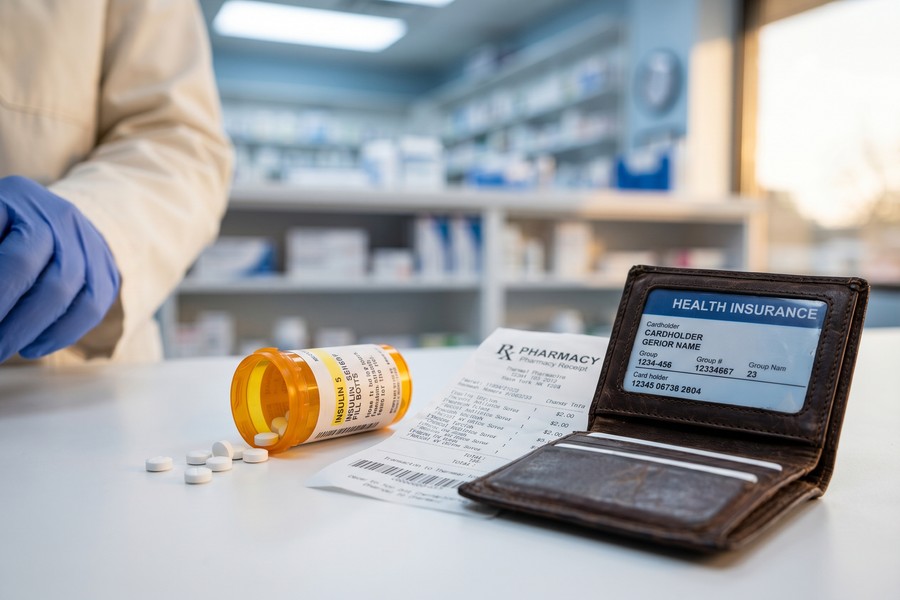
Insurers also review your prescription history through the MIB (Medical Information Bureau) database and pharmacy benefit records. Medications like insulin use in Type 2 diabetics often trigger more scrutiny than oral medications alone, even if your A1C is well-controlled. Do not assume a clean doctor’s visit means a clean underwriting record — the full prescription picture matters.
The MIB Group maintains coded health records shared among member insurers. Any previous life insurance application where you disclosed diabetes creates a permanent record that future underwriters will access — making consistency in how you present your medical history essential across all applications.
Step 2: What Medical Records Do You Need Before Applying?
Before submitting any application for term life insurance for diabetics, gather a complete medical documentation package. Underwriters will request these records anyway — having them organized in advance speeds up the process and lets you control the narrative around your health history.
How to Do This
Request the following from your primary care physician and endocrinologist at least two to four weeks before applying:
- Last two to three A1C test results with dates — showing a stable or improving trend is powerful evidence of good management.
- A current medication list including dosages, prescribing physician, and the condition each medication treats.
- Most recent comprehensive metabolic panel (CMP) — this shows kidney function, liver markers, and blood glucose, all relevant to diabetic complication screening.
- Notes from your most recent endocrinology visit — a physician’s documented statement that your diabetes is “well-controlled” carries underwriting weight.
- Any specialist reports from ophthalmology (eye exams), nephrology (kidney function), or cardiology that confirm an absence of complications.
Insurers typically order an attending physician statement (APS) from your doctor as part of underwriting. If you have this documentation ready, the APS process is faster and your doctor is working from a complete, accurate picture.
What to Watch Out For
Gaps in medical records — such as missing annual checkups or years without documented A1C testing — can raise red flags with underwriters. Inconsistency suggests poor management, even if your current numbers are good. If you have gaps, schedule a comprehensive visit with your physician before applying and get everything documented in your chart.
Ask your endocrinologist to write a brief cover letter summarizing your diabetes management history, current A1C trend, and absence of complications. A physician-authored narrative attached to your application file can meaningfully influence how an underwriter classifies your risk — it humanizes what might otherwise be a cold data review.
If you have a pre-existing condition beyond diabetes, such as hypertension or high cholesterol, gather documentation showing those conditions are also controlled — each additional managed condition reduces the compounding risk that underwriters fear most.
Step 3: Which Life Insurance Companies Are Best for Diabetics?
Not all insurers treat diabetic applicants the same way — some specialize in high-risk underwriting and offer far more competitive rates for well-controlled diabetics than others. Targeting the right carriers is the single most effective way to get approved without overpaying.
How to Do This
The following carriers have established reputations for diabetic-friendly underwriting. Each has different strengths depending on your diabetes type and control level.
| Insurance Company | Best For | Typical Rating (Well-Controlled Type 2) | Sample Monthly Premium (Male, 45, $500K, 20-Year Term) |
|---|---|---|---|
| Protective Life | Type 2 diabetics, A1C under 7.5% | Standard to Standard Plus | $88–$105 |
| Banner Life | Type 2, well-managed, no complications | Standard | $90–$110 |
| Prudential | Type 1 and Type 2 with longer history | Table 2–4 (depending on A1C) | $130–$185 |
| John Hancock | Vitality program participants, lifestyle-engaged | Standard with discount potential | $95–$120 |
| Mutual of Omaha | Older applicants, Type 2 over age 50 | Standard to Table 2 | $110–$150 |
| Lincoln Financial | Type 2, A1C under 8.0%, no insulin use | Standard to Table 2 | $100–$140 |
Note that John Hancock’s Vitality program is particularly notable for diabetics — it rewards healthy behaviors like gym visits and annual wellness screenings with premium discounts of up to 25%, making it one of the few policies where a diabetic applicant can actively reduce their rate over time through documented health engagement.
“The diabetic life insurance market has matured significantly. Carriers now differentiate sharply between a 50-year-old Type 2 diabetic with an A1C of 6.8% and no complications versus one with an A1C of 9.2% and kidney involvement. The first applicant should expect standard rates at several top carriers — not a declination.”
What to Watch Out For
Some carriers that advertise “no medical exam” policies or simplified issue coverage may appear attractive to diabetics who fear rejection. However, these policies typically cap at $100,000–$250,000 in coverage and charge premiums that are 2–3 times higher than fully underwritten policies. They should only be considered if you have been declined multiple times through traditional underwriting.

According to LIMRA life insurance industry research, 44% of Americans overestimate the cost of life insurance by 3x or more — a perception gap that is even more pronounced among applicants with health conditions like diabetes who assume they will be declined.
Step 4: Should You Use an Independent Broker or Apply Directly?
For diabetics, working with an independent life insurance broker is not just helpful — it is the most financially impactful decision in the entire process. Independent brokers have access to dozens of carriers and can shop your application informally before any formal submission occurs.
How to Do This
An independent broker, unlike a captive agent who represents only one company like State Farm or Northwestern Mutual, can submit your application to multiple carriers simultaneously — or run informal pre-underwriting inquiries before a formal application is filed. This is critical because a formal application creates a record in the MIB database, and multiple declined applications can make subsequent approvals harder.
When selecting a broker, look for these qualifications:
- Access to 30 or more carriers — fewer than that limits your options significantly for substandard cases.
- Experience specifically with impaired risk or high-risk life insurance — not all brokers have this specialty.
- Membership in the National Association of Insurance and Financial Advisors (NAIFA) or the Society of Financial Service Professionals (FSP) — both signal professional standards.
- Willingness to submit a trial application or informal inquiry to gauge underwriter sentiment before locking you into a formal submission.
Online brokerage platforms like Policygenius, Bestow, and Ladder offer comparison tools, but for diabetics, a human broker who specializes in impaired risk will consistently outperform algorithm-based platforms. The nuance required to advocate for your specific health profile is not yet automated.
What to Watch Out For
Avoid brokers who push you toward guaranteed issue or graded benefit policies without first exhausting fully underwritten options. These lower-scrutiny policies pay higher commissions in many cases — creating a misaligned incentive. Always ask: “Have you submitted applications for diabetic clients to Protective Life or Banner Life recently, and what were the outcomes?”
Every formal life insurance application you submit creates a record in the MIB database. If you apply to five carriers independently and get declined by four, the fifth will see that history. Always use a broker who can run informal pre-underwriting inquiries first — this protects your application record while you identify the most favorable carrier for your situation.
If you are also evaluating how term life fits into your broader insurance picture, reviewing what term life insurance is and how it works before your broker conversation will help you ask better questions and understand the policy structures being recommended.
Step 5: What Type of Term Policy and Term Length Should a Diabetic Choose?
Diabetics should prioritize level premium term life insurance with a term length that covers their peak financial obligation years — typically a 20-year or 30-year term — because locking in today’s rate protects against future rating increases as the condition may change with age.
How to Do This
Start by calculating your coverage need and matching it to your financial timeline. A 40-year-old diabetic parent with a mortgage and two children in grade school needs coverage through at least age 65 — making a 20-year or 25-year term the right choice. Use the data-driven framework for calculating life insurance coverage needs as your starting point.
Key decisions to make with your broker:
- Term length: A longer term locks in your current (healthier) rating for more years. If you are 42 with well-managed Type 2 diabetes, a 25-year term may cost slightly more per month than a 20-year term, but it protects against re-qualifying in your 60s when diabetes complications may have emerged. Review the comparison between 10-year and 30-year term policies to understand the trade-offs.
- Conversion option: Prioritize policies with a guaranteed conversion rider — the right to convert your term policy to a permanent policy without new medical underwriting. If your diabetes worsens, this rider lets you maintain coverage without re-qualifying.
- Return of premium (ROP) rider: Some diabetics consider this rider because it refunds premiums if you outlive the policy term. However, ROP adds 30–50% to the base premium and is rarely the best use of the added cost for health-rated applicants.
- Waiver of premium rider: This waives premium payments if you become totally disabled — relevant for diabetics, who face statistically higher disability risk than the general population.
For diabetics who are curious about what happens when a term policy ends, reading about what happens when a term life insurance policy expires is essential before committing to a term length — especially if the conversion option is unavailable at expiration.
What to Watch Out For
Do not choose a term length based solely on the lowest monthly premium. A 10-year term policy might seem affordable now, but if your diabetes progresses over that decade, re-qualifying at 50 or 55 with complications will be far more expensive — or impossible. The conversion rider and a longer original term are your insurance against your own future insurability.
If budget is tight, consider a “laddering” strategy — purchasing a smaller 30-year policy now to lock in your current health rating, and adding additional coverage with a shorter-term policy once your financial situation allows. This approach gives you long-term protection at your current rating without requiring a large premium commitment today.
Step 6: How Do You Get Through the Underwriting Process Without Being Overcharged?
Navigating the underwriting process strategically — not just submitting and waiting — is what separates applicants who get standard rates from those who pay table-rated premiums. Active participation in your own underwriting is both legal and expected.
How to Do This
Take these specific actions during the underwriting window (typically 4–8 weeks from application to decision):
- Schedule the paramedical exam strategically. Schedule your exam in the morning after fasting overnight, avoid strenuous exercise 24 hours prior, and stay well-hydrated. Blood glucose readings taken after exercise or a large meal can appear elevated — the exam captures a moment-in-time snapshot, so set that moment up for success.
- Review your attending physician statement (APS) opportunity. Ask your broker whether the carrier will accept a physician narrative alongside the APS. A letter from your endocrinologist stating your A1C trend, management approach, and complication-free status can materially influence the underwriter’s classification decision.
- Provide continuous glucose monitoring (CGM) data if available. Devices like the Dexterity Dexcom G7 or Abbott FreeStyle Libre 3 generate 90-day glucose trend data that paints a far more accurate picture than a single lab draw. Some carriers now formally accept CGM data — ask your broker whether the target carrier does.
- Request a reconsideration if you receive a table rating. If you are table-rated, ask your broker to submit a formal reconsideration request with updated medical evidence. New lab results, a physician letter, or documented A1C improvement since the original application can all support a rating reduction.
- Consider a postpone-and-reapply strategy if necessary. If your A1C is currently above 8.0%, it may be worth improving your management for 90–120 days before applying — the premium savings over a 20-year policy term can be substantial.
What to Watch Out For
Never misrepresent or omit information on a life insurance application. Life insurance policies contain a two-year contestability clause — if you die within two years of policy issuance and the insurer discovers material misrepresentation (such as undisclosed diabetes), the claim can be denied and premiums returned instead of a death benefit paid. Full, accurate disclosure is both legally required and in your family’s financial interest.
“Applicants with diabetes who come to the table with organized medical records, a clear physician narrative, and a broker who has pre-shopped their case informally almost always receive better outcomes than those who apply cold. Preparation signals to underwriters that this is a patient who takes their condition seriously — and that translates directly into risk classification.”

Understanding how a significant health diagnosis affects your broader insurance picture is also important. If diabetes represents a major life event for your coverage review, the guide on what insurance to update after a major life event covers how to audit all your policies systematically when health circumstances change.
A 2024 American Diabetes Association report found that individuals with diabetes who actively engage in structured disease management — including regular A1C monitoring, physician visits, and medication adherence — reduce their risk of major complications by 40–60%, the same factors that drive lower life insurance premiums.
Frequently Asked Questions
Can a Type 1 diabetic get term life insurance at a reasonable rate?
Yes, Type 1 diabetics can qualify for term life insurance, though rates are typically higher than for Type 2 applicants. Most approved Type 1 applicants receive Table 2 to Table 6 ratings, meaning premiums run 50% to 150% above standard rates. Carriers like Prudential and Mutual of Omaha have established underwriting guidelines specifically for Type 1 applicants with clean complication histories and A1C levels under 8.0%.
What A1C level do I need to get approved for life insurance?
An A1C level below 7.5% gives Type 2 diabetics the best chance at standard rates with top-tier carriers. A1C readings between 7.5% and 8.5% typically result in table ratings but not automatic declines. Levels consistently above 9.0% often lead to postponement or declination at most traditional insurers, though specialty carriers and graded benefit products may still offer limited coverage.
Will a life insurance company see my medical history without me disclosing it?
Yes — insurers access your health history through the MIB (Medical Information Bureau), pharmacy benefit records, and attending physician statements ordered during underwriting. Any prescription drugs, previous applications, or disclosed conditions are accessible to member insurers. Full, accurate disclosure is both legally required and strategically wise — omissions discovered during the contestability period can result in claim denial.
Is no-exam life insurance a good option for diabetics?
No-exam or simplified issue policies are a last resort for most diabetics, not a preferred strategy. They typically limit coverage to $25,000–$250,000 and charge premiums 2–4 times higher than fully underwritten policies of the same face value. Well-controlled diabetics should always pursue full underwriting first — the premium savings over a 20-year term are significant. Only applicants with multiple prior declines or very high A1C readings should consider no-exam products.
How does taking insulin affect my life insurance application?
Insulin use in a Type 2 diabetic signals more advanced disease progression to underwriters, which generally results in a less favorable rating than oral-medication-only management. However, insulin use alone does not disqualify you. Carriers evaluate insulin use in the context of your A1C, complication history, and overall health profile. Some carriers, including Prudential, have specific insulin-use guidelines that still allow standard or near-standard rates for well-managed applicants. According to PolicyGenius underwriting guidance, a Type 2 diabetic on insulin with an A1C under 7.0% can still qualify at competitive rates with the right carrier.
Should I buy life insurance now or wait until my diabetes is better controlled?
Apply now if you can qualify — do not wait. Locking in coverage while you are younger protects your insurability and fixes your rate at your current age. If your A1C is currently above 9.0%, a short 90-to-120-day improvement effort before applying may reduce your rating class and produce meaningful premium savings over a 20-year policy. But the longer you wait, the older you are at issue — and age adds premium cost independent of your diabetes rating. Work with a broker to model the trade-off for your specific situation.
What happens to my life insurance if my diabetes gets worse after I’m approved?
Once a term life insurance policy is issued, the insurer cannot change your premium or cancel your coverage because your health deteriorates — as long as you continue paying premiums. This is the core benefit of locking in a level premium term policy early. If your diabetes worsens significantly, your policy remains in force at the original rate. This is also why the conversion rider — which lets you convert to permanent coverage without new medical underwriting — is particularly valuable for diabetics.
Can I get term life insurance for diabetics through my employer’s group plan?
Yes, and group employer life insurance is often the most accessible starting point for diabetics because group plans typically do not require individual medical underwriting for base coverage amounts. Most employer plans offer one to two times your annual salary in coverage with guaranteed issue — no health questions asked. However, employer group life insurance is not a complete strategy — it is not portable when you change jobs, and the coverage amount is usually insufficient to protect a family long-term. Use group coverage as a supplement, not a substitute, for individual term coverage.
How long does it take to get approved for term life insurance with diabetes?
The underwriting process for a diabetic applicant typically takes 4 to 8 weeks from formal application to final decision. The most common delay is the attending physician statement (APS) request, which depends on how quickly your doctor’s office responds. Applicants who organize their medical records in advance and pre-authorize the APS process often see decisions in 3 to 5 weeks. Rush underwriting is available at some carriers for an additional fee, typically reducing the timeline to 2 to 3 weeks.
What if I’ve already been declined for term life insurance because of diabetes?
A prior declination does not permanently close the market to you. First, work with an independent broker who specializes in impaired risk to identify which carrier declined you and why — different carriers have different thresholds, and a declination from one does not mean all will decline. Second, if your condition has improved since the prior application, that documented improvement supports a new application with a different carrier. If traditional underwriting remains inaccessible, a graded benefit or guaranteed issue policy provides interim protection while you work toward qualifying for better coverage.
Sources
- Centers for Disease Control and Prevention — National Diabetes Statistics Report
- American Diabetes Association — Statistics About Diabetes (2024)
- LIMRA — Life Insurance Industry Research and Statistics
- PolicyGenius — Life Insurance for Diabetics: Underwriting Guide
- National Institutes of Health — How Well-Controlled Diabetes Affects Life Expectancy
- National Association of Insurance Commissioners — Life Insurance and Health Conditions Consumer Alert
- MIB Group — Medical Information Bureau Consumer Information
- National Association of Insurance and Financial Advisors (NAIFA)
- Life Happens — Term Life Insurance Consumer Education
- Consumer Reports — How Health Conditions Affect Life Insurance Rates