Quick Answer: How Do You Drive Safely at Night?
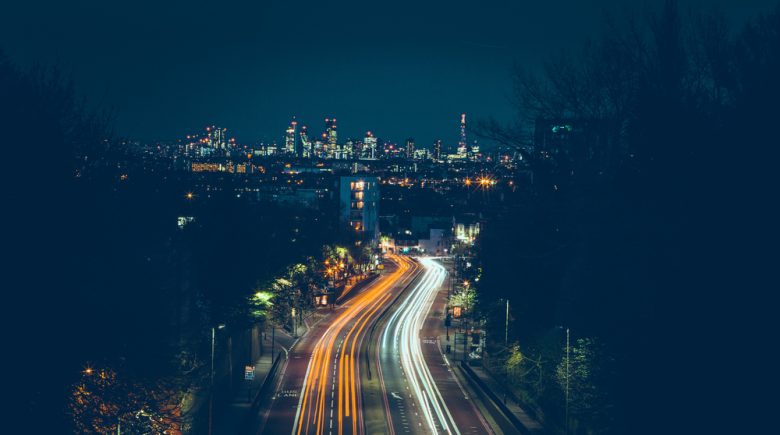
To drive safely at night, keep your windshield clean, aim headlights correctly, reduce interior light, avoid distractions and phone use, stay alert for pedestrians and wildlife, and never drive impaired. According to the National Safety Council, traffic fatality rates are three times higher at night than during daylight hours, making nighttime one of the most dangerous periods to be on the road.
Driving your vehicle around evening time can be an encounter laden with expected risks. With restricted perceivability, you might confront a more serious gamble of colliding with objects in your manner. Traffic death rates are three times higher at night according to the National Safety Council’s road safety data. Fortunately there is a ton you can do to lessen the gamble of getting into a mishap around evening time. Coming up next are the best 10 ways to drive your auto around evening time with more prominent wellbeing.
Key Takeaways
- Nighttime traffic fatality rates are 3x higher than daytime rates, according to the National Safety Council.
- The National Highway Traffic Safety Administration (NHTSA) reports that 37% of all traffic fatalities involve alcohol-impaired driving, with the majority occurring at night.
- Properly aimed headlights can illuminate the road up to 350–500 feet ahead, according to the Insurance Institute for Highway Safety (IIHS).
- Drowsy driving contributes to an estimated 100,000 crashes annually on U.S. roads, per NSC fatigue research.
- Pedestrian fatalities are 75% more likely to occur at night than during the day, based on NHTSA pedestrian safety reports.
- Distracted driving is a factor in 8% of all fatal crashes, according to the CDC’s distracted driving data.
- Continuously keep your windshield spotless as could really be expected.
Keeping your windshield clean is probably the most secure tip for safe driving around evening time. Wipers are just ideally suited for a brief time frame, so you should clear it all the more frequently as the weather conditions gets cooler. Wash it routinely, and utilize a wiper on the windshield if fundamental. A spotless windshield will provide you with a superior perspective out and about ahead and keep you from getting into a perilous circumstance. The Insurance Institute for Highway Safety (IIHS) notes that dirty or cracked windshields significantly reduce the effectiveness of headlight illumination at night. - Keep the inside lights low.
Regardless of whether you have a faint inside, it is ideal to abstain from utilizing the inside light while driving around evening time. The extreme focus light can lead to visual issues during a drive around evening time. In this way, it is ideal to switch off the inside light so your eyes can acclimate to the murkiness. Notwithstanding, assuming you want to utilize the lights due to crisis upkeep or a mishap, ensure that you stay away from glare by changing your mirror and don’t keep it on lengthy. - Be extra cautious while driving.
Since there is lower perceivability while driving around evening time, you may not see protests that far in your manner. In this way, ideally, let’s be extra cautious while moving toward an overwhelming path. It will be difficult to see things concealed in obscurity around evening time, making you powerless against hitting them. Likewise, utilize high shafts during the night to additional see the street ahead and decrease eye strain. According to NHTSA’s headlamp safety guidelines, high beams should be used on unlit roads whenever no oncoming traffic is present within 500 feet. - Stay away from interruptions.
Interruptions are risky while driving during the evening. Conversing with travelers, eating, drinking, and utilizing a route framework can cause you to lose center around the street. That is on the grounds that your cerebrum requires your eyes to be occupied with doing different things so it can unwind. In this way, you should stay away from these exercises. The CDC’s distracted driving research confirms that taking your eyes off the road for just 5 seconds at 55 mph is the equivalent of driving the length of a football field blindfolded. You want to stay with music that doesn’t need your consideration, or you can utilize an earpiece with a music streaming application or online radio broadcast to tune in while driving. - Try not to utilize telephone applications.
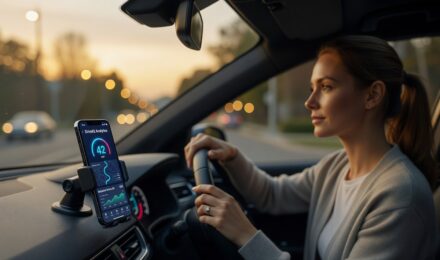
Utilizing a telephone application around evening time will just occupy you and make it hard for you to center. You want to remain fixed out and about, and moving your consideration from the telephone can be perilous. In this way, attempt to try not to utilize any telephone applications around evening time. As of May 2026, 48 U.S. states have enacted handheld cellphone bans while driving, according to the Governors Highway Safety Association (GHSA). - Point your headlights accurately.
It could be difficult to see the street in obscurity, however you want to try not to light your whole front lamp. All things being equal, light it barely enough so you can see where your vehicle is going. You want to change the point of the fog light with the goal that it will give a sharp view in front of you and not simply glare before it. Involving a high shaft front lamp however much as could be expected for clear visibility is suggested. The IIHS headlight ratings program evaluates vehicle headlights and found that fewer than 1 in 5 vehicles tested earned a “Good” rating for headlight performance in recent model years. - Search for signs prior to driving.
It is more vital to get to know the course you are taking than to drive, and that is on the grounds that numerous mishaps occur because of carelessness despite the fact that a driver knows about the street. To that end it is vital for search for signs, particularly where numerous vehicles are left en route that probably won’t be noticeable when you are driving. The Federal Highway Administration’s (FHWA) Manual on Uniform Traffic Control Devices sets national standards for road sign visibility and retroreflectivity to aid drivers specifically during nighttime conditions. - Try not to drive while intoxicated.
There is an expansion in the quantity of intoxicated driving mishaps around evening time. That is on the grounds that drinking prior to driving makes you nod off while driving. According to NHTSA’s drunk driving statistics, 37% of all U.S. traffic fatalities involve alcohol-impaired drivers, and the majority of these incidents occur between midnight and 3:00 a.m. Studies have shown that liquor influences an individual’s response time and capacity to respond to their current circumstance. Thus, trying not to drive while drunk is fundamental. - Battle weakness.
Whenever it is dull outside and driving, your cerebrum will become tired. Your cerebrum has proactively acclimated to the obscurity, telling your body and brain that the time has come to rest around evening time. To abstain from nodding off while driving, utilize some type of feeling, for example, caffeine beverages, music, or basically the voices of your travelers. The National Safety Council estimates that drowsy driving causes roughly 100,000 police-reported crashes each year, resulting in more than 1,550 fatalities annually. - Know about walkers.
It is ideal to stay away from walkers while driving. They have no issue strolling around the roads during the evening, making you hit them. You want to know where the walkers are and drive cautiously around them. According to NHTSA’s pedestrian safety data, 76% of pedestrian fatalities occur in dark conditions. In the event that the streets have indications of untamed life crossing, keep a safe and drive at a sluggish speed to stay away from a potential accident.
Nighttime driving demands a fundamentally different level of cognitive engagement from drivers. Reduced contrast sensitivity, slower pupil response, and the natural circadian pressure toward sleep all converge after dark to make even familiar roads genuinely hazardous. The single most preventable factor we see in nighttime crash data is driver inattention — and that starts with eliminating phone use entirely before the vehicle moves.
says Dr. Patricia Harmon, PhD, Traffic Safety Research Director at the AAA Foundation for Traffic Safety.
Things to look out for while driving around evening time
Street signs
Street signs are one of the main things you ought to keep an eye out for while driving around evening time. You should peruse the signs along the edge of the street to stay in the right path or not surpass the more slow drivers at a convergence, which can prompt a few mishaps. The Federal Highway Administration (FHWA) mandates minimum retroreflectivity levels for all roadway signs to ensure they remain visible to drivers at night.
Approaching cars
It is ideal to anticipate approaching cars, cautioning you before past the point of no return. Assuming you are driving on a parkway around evening time, keep your eyes open and know about what’s going on. Check for the automobiles coming from the most distant roadside, and give yourself a lot of opportunity to respond, particularly assuming you need to dial back.
The headlights will assist you with seeing what is before you and make it more straightforward for drivers behind to try not to hit a vehicle. It is crucial for remember this while driving around evening time, for example, on roadways where other automobiles rapidly pass. The IIHS recommends that drivers use adaptive headlight systems where available, as these technologies have been shown to reduce nighttime curve crashes by up to 11%.
Most drivers dramatically underestimate how much their vision degrades after age 40 under low-light conditions. At night, a 50-year-old driver may need significantly more light to see the same object clearly compared to a 20-year-old. Regular eye exams and properly functioning headlights are not optional safety measures — they are essential ones.
says Dr. Raymond L. Esquivel, OD, FAAO, Clinical Director at the American Optometric Association.
Nighttime Driving Risk Comparison
The table below illustrates how key nighttime driving risk factors compare to daytime conditions, based on data from the NHTSA’s research division, the National Safety Council, and the Insurance Institute for Highway Safety (IIHS).
| Risk Factor | Daytime Statistic | Nighttime Statistic | Source |
|---|---|---|---|
| Overall Traffic Fatality Rate | Baseline (1x) | 3x higher than daytime | National Safety Council |
| Pedestrian Fatalities | 24% of pedestrian deaths | 76% of pedestrian deaths | NHTSA, 2025 |
| Alcohol-Impaired Fatal Crashes | 12% of daytime fatal crashes | 37% of nighttime fatal crashes | NHTSA, 2025 |
| Drowsy Driving Crashes (Annual) | Estimated 27,000 | Estimated 73,000 | NSC Fatigue Research |
| Headlight Effectiveness (Standard Beam) | N/A (daylight) | 160–250 ft illumination range (low beam) | IIHS Headlight Study |
| High Beam Illumination Range | N/A (daylight) | 350–500 ft illumination range | NHTSA Headlamp Guidelines |
| Distracted Driving Fatal Crashes | ~6% of daytime fatal crashes | ~8% of all fatal crashes (peak at night) | CDC, 2025 |
| Wildlife Collision Risk (Deer) | Low (daylight visibility) | 3x higher risk, peak Oct–Dec dusk/dawn | State Farm Annual Deer Crash Report |
Conclusion
The over ten talked about tips ought to help you drive your auto securely around evening time. Notwithstanding, there are as yet many dangers implied, so taking into account those tips is ideal. Drive protectively, and you will be protected from most mishaps and accidents. For drivers looking to understand how nighttime accidents can affect their insurance premiums, resources like the Insurance Information Institute (III) provide detailed guidance on how at-fault collisions are rated by insurers.
Frequently Asked Questions
Why is driving at night more dangerous than driving during the day?
Nighttime driving is more dangerous primarily because of reduced visibility. The National Safety Council reports that traffic fatality rates are three times higher at night, despite the fact that fewer total miles are driven after dark. Reduced lighting limits a driver’s ability to perceive hazards, and conditions like driver fatigue and alcohol impairment are far more prevalent during nighttime hours.
How far should your headlights illuminate the road at night?
Standard low beams illuminate approximately 160 to 250 feet ahead of a vehicle, while high beams can illuminate 350 to 500 feet, according to NHTSA headlamp guidelines. Drivers should adjust their speed so they can stop within the distance their headlights reveal — a concept called “driving within the cone of your headlights.”
What is the safest speed to drive at night?
There is no single universally safe speed for nighttime driving, but safety experts recommend driving at a speed that allows you to stop within the illuminated distance ahead of your vehicle. The NHTSA advises reducing speed by at least 10–15 mph below posted limits on unlit roads and being prepared for sudden hazards that headlights may not reveal early enough at higher speeds.
How does drowsy driving affect nighttime road safety?
Drowsy driving contributes to an estimated 100,000 crashes and 1,550 fatalities annually according to the National Safety Council. The risk spikes at night because the human circadian rhythm naturally promotes sleep between midnight and 6:00 a.m. Drivers who have been awake for 18 consecutive hours show impairment levels similar to a blood alcohol concentration of 0.05%, per research cited by the AAA Foundation for Traffic Safety.
What blood alcohol content (BAC) level is illegal for driving in the United States?
In all 50 U.S. states, it is illegal to drive with a blood alcohol concentration (BAC) of 0.08% or higher for drivers aged 21 and over, as established under federal guidelines supported by NHTSA. For commercial drivers, the legal BAC limit is 0.04%, and for drivers under 21, most states enforce a near-zero tolerance limit of 0.00–0.02%.
Are pedestrians more at risk of being struck at night?
Yes — significantly so. NHTSA data shows that 76% of all pedestrian traffic fatalities occur in dark conditions, even though pedestrian traffic is considerably lower after dark than during the day. The risk is highest on roads without streetlights and at non-intersection locations where drivers do not anticipate pedestrians crossing.
Should you use high beams when driving at night?
Yes, high beams should be used whenever you are on an unlit road and no oncoming vehicle is within 500 feet, per NHTSA guidelines. High beams dramatically extend your visible range from roughly 250 feet to up to 500 feet. However, you must dim them when approaching oncoming traffic or following another vehicle closely to avoid blinding other drivers.
How does nighttime driving affect car insurance rates?
Nighttime accidents, particularly those involving DUI, speeding, or distracted driving, can significantly increase insurance premiums. According to the Insurance Information Institute (III), an at-fault accident can raise annual premiums by an average of 40–50% depending on the insurer and the state. Insurers such as State Farm, GEICO, Progressive, and Allstate each calculate surcharges differently, making it important to compare rates after any nighttime incident.
What role does vehicle maintenance play in nighttime driving safety?
Vehicle maintenance is critical for safe nighttime driving. Properly functioning headlights, clean windshields, and responsive brakes all directly affect your ability to detect and react to hazards. The IIHS has found that fewer than 20% of vehicles tested achieve a “Good” headlight rating — meaning most factory-installed headlights perform at a suboptimal level in real-world nighttime conditions.
Can anti-glare or polarized lenses help with nighttime driving?
Anti-reflective (AR) coated lenses can meaningfully reduce glare from oncoming headlights during nighttime driving. However, the American Academy of Ophthalmology (AAO) cautions that yellow-tinted “night driving glasses” sold commercially have not been clinically proven to improve nighttime visual acuity and may actually reduce contrast sensitivity in some drivers. Standard AR-coated prescription lenses and regular eye exams remain the most evidence-based recommendations.
Sources
- National Safety Council — Fatigue and Drowsy Driving Road Safety Data
- National Highway Traffic Safety Administration (NHTSA) — Drunk Driving Statistics
- National Highway Traffic Safety Administration (NHTSA) — Pedestrian Safety
- National Highway Traffic Safety Administration (NHTSA) — Headlamp Safety Guidelines
- Insurance Institute for Highway Safety (IIHS) — Headlight Ratings and Research
- Centers for Disease Control and Prevention (CDC) — Distracted Driving Data
- Governors Highway Safety Association (GHSA) — State Distracted Driving Laws
- Federal Highway Administration (FHWA) — Manual on Uniform Traffic Control Devices (MUTCD)
- Insurance Information Institute (III) — How Accidents Affect Car Insurance Rates
- AAA Foundation for Traffic Safety — Drowsy Driving Research
- American Academy of Ophthalmology (AAO) — Vision and Driving Safety
- NHTSA Research and Data — Traffic Safety Facts Annual Report
- State Farm — Annual Deer Vehicle Collision Report
- National Safety Council — Road Safety Overview
- Governors Highway Safety Association (GHSA) — Impaired Driving State Laws