Fact-checked by the The Insurance Scout editorial team
Quick Answer
Yes. Standard homeowners insurance covers detached garages, fences, and sheds under Coverage B (Other Structures), which typically pays up to 10% of your dwelling coverage limit. On a $350,000 home policy, that means $35,000 for all other structures combined. As of July 2025, most major insurers include this automatically — but sublimits and exclusions apply.
Other structures coverage homeowners policies include by default is found in Coverage B of a standard HO-3 policy form, governed by the Insurance Information Institute’s homeowners framework. This coverage applies to structures on your property that are not physically attached to your main house. The default limit is 10% of your Coverage A (dwelling) limit, which means coverage amounts vary directly with your home’s insured value.
With construction costs rising sharply since 2022, many homeowners are discovering their outbuildings are now worth more than their Coverage B limit allows. Knowing exactly what applies — and what does not — can prevent a costly gap at claim time.
What Does Other Structures Coverage in Homeowners Insurance Actually Cover?
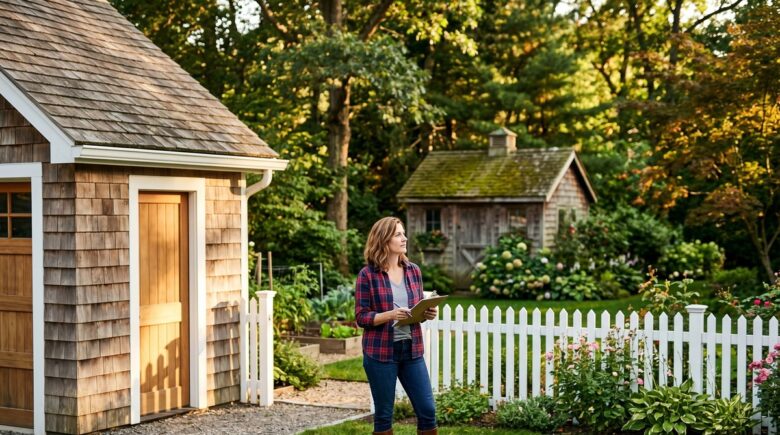
Coverage B protects structures on your property that are separated from the dwelling by a clear space or connected only by a fence, utility line, or similar connection. Detached garages are the most common example, but the category is broader than most homeowners realize.
Covered structures typically include detached garages, storage sheds, gazebos, carports, driveways, fences, retaining walls, swimming pool enclosures, and detached workshops. The same named perils or open perils that apply to your dwelling under Coverage A generally apply to Coverage B as well. On an HO-3 policy, your dwelling is covered on an open-perils basis, meaning all causes of loss are covered except those explicitly excluded — and Coverage B receives the same broad protection. If you want to understand the difference that makes in a claim, our guide on named perils vs. open perils coverage explains the practical cost difference in detail.
Coverage does not extend to structures used for business purposes or rented to anyone other than a tenant of the main dwelling. A detached garage converted into a home office or a rented studio apartment above a garage may fall outside standard Coverage B protection entirely.
Key Takeaway: Coverage B in a standard HO-3 policy automatically covers detached garages, fences, sheds, and similar structures at 10% of dwelling coverage, per the Insurance Information Institute. Structures used for business or rented out may not qualify.
How Much Coverage Do You Actually Get for Other Structures?
The standard limit for other structures coverage homeowners policies provide is 10% of Coverage A, automatically included with no additional premium. This limit applies to all covered other structures combined — not per structure.
That combined cap matters more than most people expect. If you have a $400,000 dwelling policy, your Coverage B limit is $40,000 total. A detached two-car garage alone can cost $25,000 to $50,000 to rebuild, according to HomeAdvisor’s garage construction cost data. Add a fence and a garden shed, and the 10% default limit may not be sufficient.
When the Default Limit Is Not Enough
Most insurers will increase your Coverage B limit for a modest additional premium. Common upgrade options push the limit to 20% or 30% of Coverage A. If you have recently added a large outbuilding, completed a renovation, or live in an area with high construction costs, requesting a Coverage B endorsement is worth the conversation with your insurer. Adding structures without notifying your insurer can also create underinsurance issues — a topic covered in detail in our piece on how a home renovation affects your homeowners insurance.
Your deductible applies to Coverage B claims just as it does to your dwelling. A standard $1,000 or $2,500 deductible means small damage to a fence or shed may not be worth claiming. If you are weighing how your deductible choice affects your overall coverage strategy, see our breakdown of the insurance deductible vs. premium tradeoff.
| Structure Type | Covered Under Coverage B? | Typical Rebuild Cost (2025) |
|---|---|---|
| Detached Garage | Yes (standard) | $20,000 – $50,000 |
| Wood Privacy Fence | Yes (standard) | $1,800 – $5,000 |
| Storage Shed | Yes (standard) | $2,500 – $10,000 |
| Gazebo / Pergola | Yes (standard) | $3,000 – $12,000 |
| Rented Guest House | No (excluded) | $50,000 – $150,000+ |
| Home Business Workshop | No (excluded) | $15,000 – $60,000 |
Key Takeaway: The standard other structures coverage homeowners receive is capped at 10% of dwelling coverage for all structures combined. A detached garage alone can cost up to $50,000 to rebuild, per HomeAdvisor, making limit increases worth requesting.
What Perils Are Covered — and What Gets Excluded?
Other structures coverage homeowners policies provide follows the same peril structure as your main dwelling coverage. On a standard HO-3 from carriers like State Farm, Allstate, or Travelers, Coverage B is open-perils — meaning damage is covered unless a specific exclusion applies.
Common covered perils include fire, lightning, windstorm, hail, theft, vandalism, falling objects, and the weight of ice or snow. Common exclusions that apply to both the dwelling and other structures include flooding, earthquakes, normal wear and tear, and intentional damage. Flood damage to a detached garage or fence is not covered under a standard homeowners policy — a separate National Flood Insurance Program (NFIP) policy or private flood policy is required, as clarified by FEMA’s FloodSmart resources.
Fence and Shed Damage: The Most Disputed Claims
Fences present a specific challenge. Wind damage to a fence is covered. Rot, termite damage, or gradual deterioration is not. Insurers frequently deny fence claims by classifying damage as maintenance-related rather than sudden and accidental. Documenting the condition of your fence before a storm — with dated photographs — significantly strengthens a coverage dispute. To avoid common mistakes that lead to denied claims, review our guide on homeowners insurance mistakes that lead to denied claims.
“Homeowners consistently underestimate the value of their outbuildings. A detached garage built in 2015 often costs 40% more to rebuild today due to labor and materials inflation. Coverage B limits set at policy inception rarely keep pace with actual replacement costs.”
Key Takeaway: HO-3 policies cover other structures against open perils, but flood and earthquake damage are universally excluded. A separate NFIP flood policy is required to cover detached garages and fences against flood loss.
Does Coverage B Pay Actual Cash Value or Replacement Cost?
Whether Coverage B pays replacement cost value (RCV) or actual cash value (ACV) depends on your specific policy — and the difference is substantial. Most standard HO-3 policies default to replacement cost for the dwelling (Coverage A) but may default to actual cash value for other structures unless you request otherwise.
ACV means the insurer deducts depreciation before paying your claim. A 15-year-old wood fence with an original value of $3,000 might have an ACV of only $900 after depreciation — leaving you to fund most of the replacement yourself. Replacement cost coverage pays what it actually costs to rebuild with like materials at current prices, without a depreciation deduction. The financial gap between these two options is explained thoroughly in our article on actual cash value vs. replacement cost coverage.
Always confirm with your insurer whether Coverage B is written on a replacement cost or ACV basis. If your policy shows ACV for other structures, upgrading to RCV typically adds only a small amount to your annual premium relative to the protection gained.
Key Takeaway: Other structures coverage homeowners receive may default to actual cash value, not replacement cost — meaning depreciation is deducted from your payout. Upgrading to replacement cost coverage for Coverage B prevents large out-of-pocket gaps on older structures.
How Do You Make Sure Your Other Structures Are Properly Covered?
A coverage audit is the most effective step. Start by listing every structure on your property that is not physically attached to your home, then estimate the current rebuild cost of each. Compare that total against your Coverage B limit — which is 10% of your Coverage A amount, stated on your declarations page.
If your outbuildings exceed that limit, contact your insurer and request a Coverage B endorsement to raise the limit. Costs vary by insurer, but increasing Coverage B from 10% to 20% of a $300,000 dwelling policy (an additional $30,000 in coverage) often adds less than $40 to $80 per year to your premium, according to Policygenius’s homeowners coverage analysis.
Situations That Require Immediate Coverage Review
- You built or purchased a new outbuilding or garage.
- You installed a new fence or replaced an existing one.
- You converted a garage or shed into a livable or work space.
- Construction costs in your area have risen significantly.
- You are purchasing a home for the first time — review Coverage B before closing, as outlined in our guide on homeowners insurance for first-time buyers.
Verifying your coverage levels at every policy renewal — and whenever a major property change occurs — is the most reliable way to prevent an underinsurance gap. According to Insurance Information Institute data, roughly 64% of homes in the United States are underinsured, and other structures are among the most frequently undervalued components.
Key Takeaway: Approximately 64% of U.S. homes are underinsured, per the Insurance Information Institute. Auditing your Coverage B limit at every renewal and after any new construction is the most direct way to close an other structures gap.
Frequently Asked Questions
Does homeowners insurance cover a detached garage if a car damages it?
Yes. If a vehicle crashes into your detached garage, the damage is covered under Coverage B of your homeowners policy, subject to your deductible. The at-fault driver’s auto liability insurance may also be a recovery option, but your homeowners insurer can pay first and subrogate.
Is my fence covered if a neighbor’s tree falls on it?
Yes. A tree falling on a fence is a covered peril under standard HO-3 other structures coverage homeowners policies include. Whether your insurer pursues reimbursement from your neighbor depends on negligence — if the tree was healthy, the cost typically falls to your own policy minus your deductible.
Does homeowners insurance cover a shed and its contents?
The shed structure is covered under Coverage B. The contents inside — tools, lawn equipment, bicycles — are covered separately under Coverage C (Personal Property), subject to any sublimits that apply to items in outbuildings. Many HO-3 policies limit personal property in other structures to 10% of the Coverage C limit.
What if I run a business from my detached garage or shed?
Standard Coverage B explicitly excludes structures used for business purposes. If you operate a business from a detached garage or shed, that structure requires a separate commercial property endorsement or a business owners policy (BOP) to be covered. Operating without that coverage is a common and expensive gap.
Does other structures coverage apply to a swimming pool?
An in-ground swimming pool structure is generally covered under Coverage B if it is damaged by a covered peril such as a falling object or fire. However, flooding, freezing without proper winterization, and gradual deterioration are excluded. Liability for injuries in or around the pool falls under Coverage E (personal liability), not Coverage B.
How do I increase my other structures coverage limit?
Contact your insurer or agent and request a Coverage B endorsement to raise the limit above the standard 10% of dwelling coverage. Most major insurers — including State Farm, Allstate, and Travelers — offer increases to 20% or 30% of Coverage A for a modest additional premium, typically under $100 per year for most homes.
Sources
- Insurance Information Institute — What Is Covered by Standard Homeowners Insurance
- Insurance Information Institute — Facts and Statistics: Homeowners and Renters Insurance
- FEMA FloodSmart — Why Homeowners Need Flood Insurance
- Policygenius — Other Structures Coverage in Homeowners Insurance
- HomeAdvisor — Cost to Build a Garage: 2025 Data
- National Association of Insurance Commissioners — A Consumer’s Guide to Home Insurance
- NAIC — Standard Homeowners Policy Forms Overview