Fact-checked by the The Insurance Scout editorial team
Quick Answer
Homeowners insurance covers foundation damage only when caused by a sudden, covered peril — such as a fire, explosion, or burst pipe. As of July 2025, most policies exclude the two most common causes: soil settling and water seepage. Repair costs average $4,500 to $12,000, often paid entirely out of pocket.
Homeowners insurance foundation damage coverage is one of the most misunderstood areas of a standard policy. Most homeowners assume their home’s structure is fully protected — but according to the Insurance Information Institute, foundation damage is routinely excluded unless a named, covered peril directly causes the harm. The distinction between what triggered the damage — not the damage itself — determines your payout.
With foundation repair costs rising and extreme weather events increasing across the U.S., understanding exactly where your coverage starts and stops has never been more important.
What Does Homeowners Insurance Actually Cover for Foundations?
Standard homeowners insurance covers foundation damage only when it results directly from a sudden and accidental covered peril listed in your policy. The most common covered scenarios involve fire, explosion, a vehicle striking the home, or a burst pipe that causes sudden structural movement.
The HO-3 policy — the most widely sold homeowners form in the U.S. — covers your dwelling on an open-perils basis, meaning all causes of loss are covered unless specifically excluded. However, policies universally exclude earth movement, settling, shrinking, bulging, and water damage from below ground. These exclusions eliminate the vast majority of real-world foundation claims before they start.
Covered Perils That May Affect Your Foundation
If a sudden pipe burst causes water to undermine your slab, that event may be covered under your dwelling protection. Similarly, if a vehicle crashes into your home’s base wall, the resulting structural damage typically falls under your policy’s Coverage A. Understanding named perils vs. open perils coverage is essential to knowing which events qualify.
Key Takeaway: Homeowners insurance covers foundation damage only from sudden, listed perils — not from gradual causes. The Insurance Information Institute confirms that standard HO-3 policies exclude settling, earth movement, and water seepage, which cause the majority of real foundation problems.
What Causes Are Excluded From Foundation Coverage?
The exclusions that eliminate most foundation claims are broadly written and consistently applied across all major insurers. Soil settlement, shrinkage, and expansion are the leading culprits — and all are explicitly excluded.
Common excluded causes include:
- Soil settling, shifting, or expanding (clay soils are especially problematic in the South and Midwest)
- Earthquakes and earth movement
- Flooding and surface water intrusion
- Hydrostatic pressure from groundwater
- Poor construction or faulty workmanship
- Tree root infiltration
- General wear and deterioration over time
According to FEMA’s National Flood Insurance Program, flood-related foundation damage requires a separate flood insurance policy entirely — standard homeowners coverage does not apply. Earthquake damage to foundations similarly requires a standalone earthquake endorsement or policy.
Homeowners who discover cracks after heavy rain or drought are almost always dealing with soil movement — an excluded cause. Even if the visible damage looks structural, insurers will investigate the root cause before paying. Many claims are denied at this stage. Reviewing common homeowners insurance mistakes that lead to denied claims can help you avoid a rejection before you file.
Key Takeaway: Soil movement and flooding — the two most common foundation damage causes — are both excluded from standard policies. FEMA’s NFIP requires a separate flood policy for water-related foundation damage, which costs an average of $888 per year nationally.
How Much Does Foundation Repair Cost Without Insurance?
Without insurance coverage, homeowners bear the full cost of foundation repair — and those costs vary dramatically by damage type and method. Minor crack repairs start around $500, while full foundation replacement can exceed $100,000 for severe cases.
According to data from Angi’s 2024 foundation repair cost report, the national average sits between $4,500 and $12,000 for mid-range repairs. Piering and underpinning — needed when the foundation has shifted significantly — runs between $1,000 and $3,000 per pier, with most jobs requiring 8 to 12 piers.
| Damage Type | Typical Repair Method | Average Cost Range |
|---|---|---|
| Hairline Cracks | Epoxy or polyurethane injection | $500 – $1,500 |
| Bowing Walls | Carbon fiber straps or wall anchors | $4,000 – $12,000 |
| Sinking Foundation | Steel piering / underpinning | $10,000 – $40,000 |
| Full Foundation Replacement | Complete excavation and rebuild | $40,000 – $100,000+ |
| Water Seepage Repair | Drainage systems / waterproofing | $3,000 – $10,000 |
These out-of-pocket costs make it critical to understand your policy before damage occurs. If your home’s value could be affected by a major repair, consider how your coverage levels compare — our breakdown of homeowners insurance costs by state in 2026 shows how premiums differ based on risk exposure.
“Foundation issues are almost never sudden events — they develop over months or years. Insurers look very carefully at the timeline of damage, and anything that appears gradual will almost certainly be excluded under the standard policy language.”
Key Takeaway: Foundation repairs average $4,500 to $12,000 nationally, according to Angi’s 2024 cost data. Without coverage, homeowners absorb these costs entirely — making proactive policy review and supplemental coverage essential for high-risk properties.
Can You Get Additional Coverage for Foundation Damage?
Yes — gaps in standard homeowners coverage can be partially filled through endorsements, riders, and separate policies. No single add-on covers all foundation damage scenarios, but combining multiple products significantly reduces your exposure.
Flood Insurance Through NFIP or Private Carriers
If your foundation damage stems from flooding, a National Flood Insurance Program (NFIP) policy covers up to $250,000 in building damage, including foundation elements. Private flood insurers like Neptune Flood or Palomar Specialty sometimes offer higher limits and broader terms. Note that NFIP policies carry a standard 30-day waiting period before taking effect.
Earthquake Endorsements
Homeowners in seismically active states — California, Oregon, Washington, and Alaska — should strongly consider an earthquake endorsement or a standalone policy through the California Earthquake Authority or private carriers. These policies cover foundation damage caused by seismic activity, which is excluded from all standard HO-3 forms.
Service Line and Equipment Breakdown Coverage
If a failed underground pipe erodes your foundation over time, standard policies won’t cover it — but a service line endorsement may reimburse repair costs for the pipe itself. This doesn’t cover the resulting foundation damage, but it stops the source. Understanding how renovations and maintenance affect your coverage is also worth reviewing — see our guide on how a home renovation affects your homeowners insurance.
Key Takeaway: NFIP flood policies cover up to $250,000 in structural damage from flooding, including some foundation elements. Earthquake endorsements address seismic causes. No single add-on covers all scenarios — the California Earthquake Authority is a key resource for homeowners in high-risk zones.
How Do You File a Homeowners Insurance Claim for Foundation Damage?
Filing a homeowners insurance foundation damage claim requires thorough documentation and a clear connection between the damage and a covered peril. Weak documentation is the most common reason valid claims are underpaid or denied.
Follow these steps when filing:
- Document everything immediately. Photograph all visible cracks, bowing, or separation before any repairs are made.
- Identify the triggering event. Insurers will ask what caused the damage. A burst pipe, vehicle impact, or fire is documentable — soil shift is harder to link to a covered event.
- Get an independent structural engineer’s report. A licensed engineer’s assessment carries more weight than a contractor’s estimate and helps establish cause.
- Contact your insurer promptly. Most policies require timely reporting — delays can give insurers grounds to reduce or deny payment.
- Review the adjuster’s findings. If denied, request a written explanation citing the specific policy exclusion. You have the right to dispute the decision.
Understanding the difference between actual cash value vs. replacement cost coverage also matters here — the payout method affects how much you receive for structural repairs. Knowing your policy type before you file prevents unpleasant surprises.
The National Association of Insurance Commissioners (NAIC) provides state-specific resources for policyholders disputing a denied claim, including contact information for each state’s insurance department.
Key Takeaway: A structural engineer’s written assessment is the single most important document in a foundation claim. The NAIC offers dispute resources if your claim is denied — and most states require insurers to respond to disputes within 15 to 45 days of receipt.
Frequently Asked Questions
Does homeowners insurance cover foundation cracks?
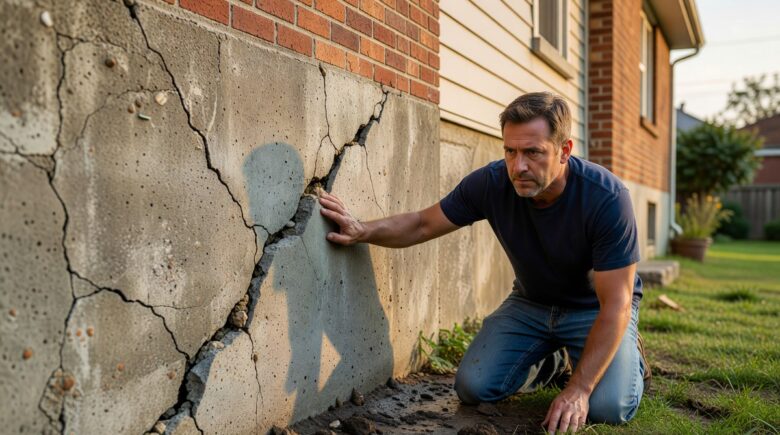
It depends on the cause. Hairline cracks from soil settling or age are excluded under virtually all standard policies. Cracks caused by a sudden covered event — such as a burst pipe or explosion — may be covered under your dwelling protection. Always document the triggering event before filing.
Does homeowners insurance cover foundation damage from tree roots?
No. Tree root infiltration is considered a gradual process and is explicitly excluded from standard homeowners policies. This falls under the “settling, cracking, shrinking, or expansion” exclusion. Preventing root damage through landscaping maintenance is the homeowner’s responsibility.
Will homeowners insurance cover a sinking foundation?
Rarely. A sinking foundation is almost always caused by soil movement, poor compaction, or erosion — all excluded causes. If the sinking resulted directly from a sudden covered peril (like a plumbing failure), a partial claim may succeed, but insurers will investigate the root cause carefully.
Does homeowners insurance cover foundation damage from flooding?
No — standard homeowners insurance does not cover flood-related foundation damage. You need a separate flood insurance policy through the NFIP or a private carrier. NFIP building coverage includes foundations up to the $250,000 limit.
Is foundation damage covered under home warranty vs. homeowners insurance?
These are entirely different products. A home warranty covers mechanical systems and appliances that fail due to normal wear. Foundation damage is not typically covered by home warranties either. Homeowners insurance addresses sudden and accidental structural damage from covered perils. Neither product covers gradual settling.
What type of homeowners insurance claim is foundation damage filed under?
If covered, foundation damage is filed under Coverage A (Dwelling) — the section that protects the physical structure of your home. Your claim payout depends on whether you carry replacement cost or actual cash value coverage, and your policy’s deductible applies before any reimbursement is issued.
Sources
- Insurance Information Institute — What Is Covered by Standard Homeowners Insurance
- FEMA — National Flood Insurance Program Overview
- Angi — How Much Does Foundation Repair Cost?
- California Earthquake Authority — Earthquake Insurance for Homeowners
- National Association of Insurance Commissioners (NAIC) — Consumer Resources
- Consumer Financial Protection Bureau — What Is Homeowners Insurance?
- International Risk Management Institute (IRMI) — Homeowners Policy Definition