
Auto Insurance

Does Car Insurance Cover Rental Cars? Everything You Need to Know

Illustration: Create a photograph that visually represents the concept of "Personal Accident Insurance and Persona

You’re standing at the rental car counter, exhausted after a long flight, and the agent asks if you want to add the collision damage waiver for an extra $30 a day. Your gut says you’re probably already covered — but are you really? Millions of travelers face this exact moment every year, and most have no idea whether does car insurance cover rental cars is even a question they should have answered before leaving home. The truth is, your existing policy might cover you fully, partially, or not at all depending on a handful of details most people never check.

According to the Insurance Information Institute, roughly 83% of Americans carry some form of auto insurance — yet surveys consistently show that fewer than half understand what their policy actually covers when they’re behind the wheel of a rental. That knowledge gap costs drivers hundreds of millions of dollars each year in unnecessary add-on coverage they didn’t need, or in out-of-pocket losses they didn’t see coming.

This guide cuts through the confusion. By the time you finish reading, you’ll know exactly how your personal auto policy applies to rentals, which coverages transfer and which don’t, what your credit card might (and might not) cover, and how to make a smart, confident decision at that rental counter — without overpaying or leaving yourself exposed.

Key Takeaways

  • Your personal auto insurance policy typically extends to rental cars — but only if you carry comprehensive and collision coverage on your own vehicle.
  • Rental car damage waivers (CDW/LDW) can cost $15–$30 per day, adding $105–$210 to a one-week rental.
  • Most major credit cards offer secondary rental car coverage, meaning your personal insurance pays first and the card covers the gap.
  • Liability coverage from your personal policy generally does extend to rentals in the U.S. and Canada, but rarely to international rentals.
  • Gap-type charges like loss of use fees — what the rental company loses while the car is being repaired — are often NOT covered by personal auto insurance.
  • Rental car coverage through your insurer typically costs only $2–$9 per month as an add-on to your existing policy.

How Personal Auto Insurance Works With Rentals

The foundational rule is straightforward: your personal auto insurance policy generally follows you, not your car. That means when you rent a vehicle for personal use, your existing coverages extend to that rental in most situations.

However, the key word is “generally.” The exact coverages that transfer depend on what you carry on your own policy. A bare-bones liability-only policy behaves very differently from a full-coverage policy with comprehensive and collision.

The “Personal Use” Requirement

Most policies specify that rental car coverage applies during personal use only. Renting a car for a vacation or weekend trip? You’re almost certainly covered. Using a rental for a work assignment or as a replacement while your personal vehicle is being repaired sits in a grayer area.

Always read your policy’s definitions section. Some policies use the phrase “temporary substitute vehicle,” which can affect how coverage applies depending on why you’re renting.

Did You Know?

Most standard personal auto policies treat a rental car as a “non-owned vehicle,” meaning your policy’s coverages extend to it at the same limits you carry on your own car — not reduced limits.

Same Limits Apply

When your policy extends to a rental, it does so at the same coverage limits you carry on your own vehicle. If your collision deductible is $500 on your personal car, it’s $500 on the rental too. There’s no magic “rental car upgrade” built into your existing policy.

This is worth keeping in mind if you carry a high deductible to save on premiums. A $1,000 deductible might feel manageable when you own the car, but it can sting when you’re dealing with damage to someone else’s rental fleet vehicle.

Which Coverages Transfer to a Rental Car

Not all coverage types behave the same way when you step into a rental. Understanding the mechanics of each helps you figure out exactly where you stand before you get to the counter.

Liability Coverage

Liability coverage — which pays for injuries and property damage you cause to others — almost always transfers to rental cars in the United States and Canada. This is the most universally portable coverage in your policy.

If you cause an accident in a rental car and injure another driver, your liability coverage kicks in up to your policy’s limits. For a refresher on why strong liability limits matter, check out our article on why liability insurance costs are exploding in 2026 — the numbers will surprise you.

Comprehensive and Collision Coverage

Collision coverage pays for damage to the rental car if you’re in an accident. Comprehensive coverage covers theft, vandalism, weather damage, and other non-collision events. Both transfer to a rental — but only if you carry them on your personal policy.

If you only carry liability on your own car, neither coverage extends to the rental. That’s the most common gap that trips people up at the rental counter.

Diagram showing which personal auto insurance coverages extend to rental cars

Uninsured/Underinsured Motorist Coverage

Uninsured motorist (UM) coverage generally transfers to a rental car as well. So if an uninsured driver hits you while you’re in a rental, your UM coverage can step in to cover your medical bills and related losses.

Personal injury protection (PIP) and medical payments coverage also typically apply inside a rental vehicle, covering you and your passengers regardless of fault.

By the Numbers

According to the Insurance Information Institute, approximately 1 in 7 drivers in the U.S. is uninsured — making UM coverage more valuable than ever, even in a rental car.

What Your Policy Won’t Cover

Here’s where things get genuinely surprising. Even a solid full-coverage policy leaves some real gaps when it comes to rental cars. These are the charges that can blindside drivers who assumed they were fully protected.

Loss of Use Fees

Loss of use fees are charges the rental company bills while the damaged car is being repaired and unavailable to rent. Think of it as lost revenue they’re passing on to you. These fees can easily total several hundred dollars for a moderate repair.

Standard personal auto policies typically do not cover loss of use fees. Some insurers explicitly exclude them. A few do cover them — but you need to confirm this with your provider directly.

Watch Out

Rental companies can charge loss of use fees even if the damage was minor and the car was repaired quickly. Always ask your insurer in writing whether your policy covers loss of use before your trip.

Diminished Value Claims

Diminished value refers to the reduction in a vehicle’s resale value after it’s been in an accident — even after a perfect repair. Rental companies increasingly pursue diminished value claims from at-fault drivers.

Most personal auto policies exclude diminished value claims on vehicles you don’t own. This is another area where a credit card’s rental coverage or the rental company’s own CDW can provide protection your personal policy won’t.

Administrative and Towing Fees

Rental companies often charge administrative fees on top of repair costs when processing a damage claim. These fees, along with towing or storage charges, are frequently excluded from standard personal auto policies as well.

The bottom line: even full coverage doesn’t mean zero out-of-pocket exposure on a rental car claim. The total bill from a rental company can exceed what your insurance pays.

Credit Card Rental Car Coverage Explained

Your credit card may be your second line of defense — but understanding exactly what it offers is critical. Most people assume their card “covers rentals,” but the details matter enormously.

Primary vs. Secondary Coverage

The vast majority of credit cards offer secondary coverage. That means your personal auto insurance pays first, and the card covers whatever’s left — typically your deductible and any uncovered amounts. Only a handful of premium travel cards, like the Chase Sapphire Preferred or Reserve, offer true primary coverage that pays before your personal insurance.

Primary coverage is a significant benefit. It means you won’t have to file a claim with your personal insurer, which could affect your rates. For context on how claims can push your premiums higher, read our breakdown of why insurance premiums are climbing faster than paychecks.

What Credit Cards Typically Exclude

Credit card rental coverage usually excludes luxury vehicles, trucks, exotic cars, and vehicles rented for more than 15–31 days (depending on the card). International rentals may also be excluded in certain countries.

Most card coverage also does not include liability — it only covers damage to or theft of the rental vehicle itself. You still need your personal liability coverage for injuries or damage to other vehicles.

Pro Tip

Before you rent, call the number on the back of your credit card and ask specifically: “Does my card offer primary or secondary rental car coverage, and are there any vehicle types or countries excluded?” Get the answer in writing by requesting a benefits summary via email.

Coverage Source Type What It Covers Common Gaps
Personal Auto Policy Primary Liability, collision, comprehensive (if carried) Loss of use, diminished value, admin fees
Credit Card (Standard) Secondary Collision, theft of rental vehicle Liability, loss of use, luxury/exotic cars
Credit Card (Premium) Primary Collision, theft of rental vehicle Liability, long-term rentals, some countries
Rental CDW/LDW Primary Damage, theft, loss of use, admin fees Liability, personal belongings inside car
Standalone Travel Insurance Primary or Secondary Varies widely by policy Check policy terms carefully

Rental Company Coverage Options: Worth It or Not?

Rental companies offer several coverage products at the counter. They’re often presented in confusing ways, and agents are trained to make them sound essential. Here’s what each one actually does.

Collision Damage Waiver (CDW) and Loss Damage Waiver (LDW)

The collision damage waiver (CDW) — sometimes called a loss damage waiver (LDW) — is the big-ticket item. It waives your financial responsibility for damage to or theft of the rental vehicle. It’s not technically insurance; it’s a waiver of the rental company’s right to hold you liable.

CDW/LDW typically costs $15–$30 per day and often covers loss of use fees and administrative charges that your personal policy won’t. If you don’t carry comprehensive and collision on your own vehicle, the CDW may be worth every penny.

Supplemental Liability Insurance (SLI)

Supplemental liability insurance (SLI) adds liability protection beyond what your personal policy covers. It’s designed for drivers who carry low liability limits or are traveling internationally where their personal policy doesn’t extend.

For most drivers with adequate liability limits, SLI is redundant. But if you’re not sure your limits are high enough, our guide on auto insurance basics for every driver can help you evaluate whether your current limits are sufficient.

Did You Know?

Rental companies are not required to explain what your personal insurance or credit card already covers. Their agents may present add-ons as if they’re always necessary — even when they aren’t for a fully insured driver.

Personal Accident Insurance and Personal Effects Coverage

Personal accident insurance (PAI) covers medical costs for you and passengers in an accident. If you have health insurance or PIP coverage, PAI is usually redundant. Personal effects coverage (PEC) covers items stolen from the rental — typically duplicating your homeowners or renters insurance.

These two add-ons are almost always unnecessary if you have solid health, auto, and home coverage in place. Skip them unless you have a specific gap.

Does Car Insurance Cover Rental Cars for Business Trips?

This is one of the most frequently misunderstood scenarios. The question of whether does car insurance cover rental cars changes significantly when the rental is for work purposes.

Personal Policy Limitations for Business Use

Most personal auto insurance policies exclude coverage during business use. If your employer sent you on a business trip and you rent a car to visit clients, your personal policy may not cover you if something goes wrong.

The exclusion varies by insurer and by how “business use” is defined in your policy. Driving a rental to a conference once a year might be treated differently than using a rental as a regular work vehicle.

What Your Employer’s Policy May Cover

If you’re renting a car for business travel, your employer’s commercial auto policy may provide coverage. Ask your company’s HR or risk management department before your trip — not after an accident.

Some companies require employees to purchase the rental company’s CDW and then reimburse them. Others have blanket commercial policies that cover employee rentals. Know your company’s policy before you reach the counter.

Business traveler at rental car counter reviewing insurance coverage options

“One of the most common coverage gaps we see involves business travelers who assume their personal auto policy covers them during work trips. It often doesn’t — and the cost of that assumption can be significant.”

— J. Robert Hunter, Director of Insurance, Consumer Federation of America

International Rentals and Your Coverage

The question of does car insurance cover rental cars becomes much more complicated the moment you cross an international border. U.S. auto policies are generally designed for domestic use.

Coverage in Canada and Mexico

Most U.S. auto policies extend coverage into Canada without issue. The coverage works similarly to domestic rentals — your existing coverages follow you across the border.

Mexico is a different story. U.S. policies almost universally do not provide coverage in Mexico. Mexican law requires liability coverage issued by a Mexican insurance company. If you’re renting a car in Mexico, purchasing liability coverage from a local insurer is not optional — it’s a legal requirement.

Other International Destinations

For travel to Europe, Asia, Australia, and most other international destinations, your U.S. personal auto policy provides no coverage. You’re essentially uninsured unless you purchase the rental company’s coverage or a standalone travel insurance policy that includes rental car coverage.

Before any international trip involving a rental car, contact your insurer to confirm your coverage territory. Don’t assume — ask explicitly.

Did You Know?

Some premium travel credit cards extend rental coverage internationally, but many exclude specific countries. Always verify coverage for your exact destination before declining the rental company’s coverage abroad.

When to Buy Extra Rental Coverage

Knowing when to skip the rental counter’s add-ons is just as important as knowing when to buy them. The right answer depends on your specific situation.

Situations Where You Should Buy the CDW

Consider purchasing the CDW if you only carry liability coverage on your personal vehicle — since collision and comprehensive won’t extend to the rental. It’s also smart if you’re traveling internationally where your personal policy doesn’t apply.

If you’re renting an expensive or luxury vehicle, the CDW is often worth it. Damage to a high-end rental can quickly exceed your personal policy’s coverage limits or trigger a large deductible. You might also want to review our tips on reducing your car insurance costs to free up budget for situations where add-on coverage makes sense.

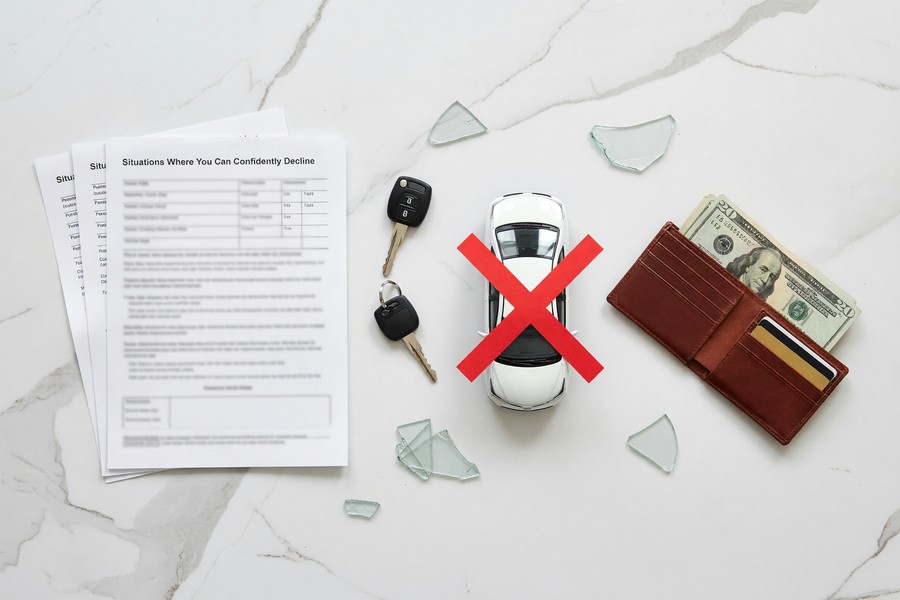
Situations Where You Can Confidently Decline

If you carry full coverage (comprehensive and collision) on your personal vehicle and have a premium credit card that offers primary rental coverage, you can almost certainly decline the CDW with confidence. That said, remember the gaps around loss of use and diminished value.

When making this decision, also factor in your deductible. A high deductible that would hurt financially in a claim scenario might tip the balance toward purchasing the CDW — especially on longer trips where the daily cost adds up less dramatically relative to your exposure.

Pro Tip

Add a rental car reimbursement endorsement to your personal auto policy for $2–$9 per month. This small add-on ensures you have a rental covered if your own car is in the shop — a completely separate but equally valuable benefit.

“Consumers who understand their existing coverage before they travel consistently make better, more confident decisions at the rental counter — and they almost always save money compared to those who buy everything out of fear.”
— Amy Bach, Executive Director, United Policyholders
Checklist comparing rental car coverage options for different traveler types
By the Numbers

The Federal Trade Commission estimates that add-on fees and insurance products at rental counters can increase the total rental cost by 25–50% for consumers who don’t review their existing coverage first.

Your Action Plan

  1. Review Your Personal Auto Policy Before You Rent

    Pull out your declarations page and confirm whether you carry comprehensive and collision coverage. Note your deductible amounts and liability limits. This takes five minutes and tells you whether your existing policy covers the rental vehicle for physical damage.

  2. Call Your Insurer and Ask the Right Questions

    Contact your insurance company directly and ask: Does my policy cover rental cars? Does it cover loss of use fees? Does it apply outside the U.S.? Does coverage change if I’m renting for business? Get specific answers — not general reassurances.

  3. Check Your Credit Card’s Rental Coverage

    Call the number on the back of your card or log into your card’s benefits portal. Find out whether coverage is primary or secondary, which vehicle types are excluded, and whether your destination country is covered. Request a written benefits summary.

  4. Understand the Rental Company’s Add-Ons Before You Arrive

    Research CDW pricing and what it covers for the specific rental company you’re using. Know in advance whether you plan to accept or decline each add-on so you’re not making that decision under pressure at the counter.

  5. Determine If a Rental Car Coverage Add-On Makes Sense

    Talk to your insurer about adding a standalone rental coverage endorsement to your personal policy. At $2–$9 per month, it can fill gaps around loss of use and administrative fees that your base policy doesn’t cover — often cheaper than buying the CDW at the counter even once a year.

  6. Confirm Your Coverage for International Trips Separately

    If you’re renting outside the U.S. or Canada, assume your personal policy doesn’t apply until you’ve confirmed otherwise. For Mexico, purchase local liability insurance — it’s legally required. For other international destinations, consider a travel insurance policy with rental car coverage built in.

  7. Document the Rental Car at Pickup and Return

    Walk around the vehicle with the rental agent before driving away. Take timestamped photos and video of every angle, including the roof, undercarriage, and interior. Do the same at return. This documentation is critical if there’s a damage dispute later.

Frequently Asked Questions

Does car insurance cover rental cars automatically?

In most cases, yes — your personal auto insurance policy extends to rental cars used for personal purposes within the U.S. and Canada. However, the specific coverages that transfer depend on what you carry on your own policy. If you only have liability coverage, that’s all that extends to the rental.

Will using my personal insurance for a rental claim raise my rates?

It can. Filing a collision or comprehensive claim — even on a rental — may affect your premium at renewal. This is one reason why having a premium credit card with primary rental coverage is valuable: it lets you file a claim with the card instead of your personal insurer, keeping your insurance record clean.

What happens if someone else drives the rental car?

Rental car agreements typically require that all drivers be listed on the contract. If an unlisted driver causes an accident, the rental company may refuse to honor any CDW and could pursue full damage costs from the renter. Your personal auto policy may cover other licensed drivers with your permission, but confirm this with your insurer before letting anyone else drive.

Does car insurance cover rental cars if my own car is being repaired?

If your personal car is in the shop after a covered claim, your policy’s rental reimbursement endorsement (if you have one) helps pay for a rental while it’s being repaired. This is a separate benefit from whether your policy covers damage to the rental vehicle itself. If you don’t have a rental reimbursement endorsement, you’ll pay out of pocket for the rental.

Are there types of rental vehicles that personal insurance won’t cover?

Yes. Most personal auto policies exclude coverage for commercial vehicles, cargo vans, moving trucks, exotic or luxury vehicles above a certain value, and recreational vehicles like motorhomes. If you’re renting something outside a standard passenger car or SUV, verify coverage explicitly with your insurer first.

Does car insurance cover rental cars for rideshare use?

No. If you rent a car and use it to drive for a rideshare platform like Uber or Lyft, your personal auto policy almost certainly excludes coverage during commercial use. Rideshare platforms carry their own commercial insurance during active trips, but there are coverage gaps between trips. This is a high-risk scenario that requires specific commercial or rideshare coverage.

How does a rental car claim actually work if I have an accident?

You report the accident to the rental company and to your personal insurer. Your insurer assigns an adjuster to evaluate the damage and determine what it will pay based on your coverage. The rental company submits its repair bill. If there are charges your insurance doesn’t cover — like loss of use or admin fees — the rental company bills you directly for those amounts.

Does travel insurance cover rental cars?

Some travel insurance policies include rental car damage coverage, but it’s not standard across all plans. Coverage levels, exclusions, and whether coverage is primary or secondary vary widely. If you’re purchasing travel insurance, look specifically for a “rental car damage” or “car rental collision” benefit and read the terms carefully. For more on evaluating insurance policies, our guide on key factors to consider when selecting an insurance policy offers helpful framework.

What if the rental company charges more than my insurance will pay?

Unfortunately, this happens. Rental companies can charge for repairs, loss of use, administrative fees, and diminished value — some of which your insurer may not cover. You’re personally responsible for any amount the rental company charges that your insurance and credit card coverage don’t cover. This is why documenting the vehicle thoroughly at pickup and return is essential.

Is there a way to get rental car coverage without paying at the counter?

Yes, two ways. First, confirm that your existing comprehensive and collision coverage extends to the rental — if so, physical damage is covered. Second, use a credit card with primary rental car coverage for the rental charge to activate that benefit. If you also want to cover loss of use gaps, add a rental endorsement to your personal auto policy for a few dollars a month.


You’re standing at the rental car counter, exhausted after a long flight, and the agent asks if you want to add the collision damage waiver for an extra $30 a day. Your gut says you’re probably already covered — but are you really? Millions of travelers face this exact moment every year, and most have no idea whether does car insurance cover rental cars is even a question they should have answered before leaving home. The truth is, your existing policy might cover you fully, partially, or not at all depending on a handful of details most people never check.

According to the Insurance Information Institute, roughly 83% of Americans carry some form of auto insurance — yet surveys consistently show that fewer than half understand what their policy actually covers when they’re behind the wheel of a rental. That knowledge gap costs drivers hundreds of millions of dollars each year in unnecessary add-on coverage they didn’t need, or in out-of-pocket losses they didn’t see coming.

This guide cuts through the confusion. By the time you finish reading, you’ll know exactly how your personal auto policy applies to rentals, which coverages transfer and which don’t, what your credit card might (and might not) cover, and how to make a smart, confident decision at that rental counter — without overpaying or leaving yourself exposed.

Key Takeaways

  • Your personal auto insurance policy typically extends to rental cars — but only if you carry comprehensive and collision coverage on your own vehicle.
  • Rental car damage waivers (CDW/LDW) can cost $15–$30 per day, adding $105–$210 to a one-week rental.
  • Most major credit cards offer secondary rental car coverage, meaning your personal insurance pays first and the card covers the gap.
  • Liability coverage from your personal policy generally does extend to rentals in the U.S. and Canada, but rarely to international rentals.
  • Gap-type charges like loss of use fees — what the rental company loses while the car is being repaired — are often NOT covered by personal auto insurance.
  • Rental car coverage through your insurer typically costs only $2–$9 per month as an add-on to your existing policy.

How Personal Auto Insurance Works With Rentals

The foundational rule is straightforward: your personal auto insurance policy generally follows you, not your car. That means when you rent a vehicle for personal use, your existing coverages extend to that rental in most situations.

However, the key word is “generally.” The exact coverages that transfer depend on what you carry on your own policy. A bare-bones liability-only policy behaves very differently from a full-coverage policy with comprehensive and collision.

The “Personal Use” Requirement

Most policies specify that rental car coverage applies during personal use only. Renting a car for a vacation or weekend trip? You’re almost certainly covered. Using a rental for a work assignment or as a replacement while your personal vehicle is being repaired sits in a grayer area.

Always read your policy’s definitions section. Some policies use the phrase “temporary substitute vehicle,” which can affect how coverage applies depending on why you’re renting.

Did You Know?

Most standard personal auto policies treat a rental car as a “non-owned vehicle,” meaning your policy’s coverages extend to it at the same limits you carry on your own car — not reduced limits.

Same Limits Apply

When your policy extends to a rental, it does so at the same coverage limits you carry on your own vehicle. If your collision deductible is $500 on your personal car, it’s $500 on the rental too. There’s no magic “rental car upgrade” built into your existing policy.

This is worth keeping in mind if you carry a high deductible to save on premiums. A $1,000 deductible might feel manageable when you own the car, but it can sting when you’re dealing with damage to someone else’s rental fleet vehicle.

Which Coverages Transfer to a Rental Car

Not all coverage types behave the same way when you step into a rental. Understanding the mechanics of each helps you figure out exactly where you stand before you get to the counter.

Liability Coverage

Liability coverage — which pays for injuries and property damage you cause to others — almost always transfers to rental cars in the United States and Canada. This is the most universally portable coverage in your policy.

If you cause an accident in a rental car and injure another driver, your liability coverage kicks in up to your policy’s limits. For a refresher on why strong liability limits matter, check out our article on why liability insurance costs are exploding in 2026 — the numbers will surprise you.

Comprehensive and Collision Coverage

Collision coverage pays for damage to the rental car if you’re in an accident. Comprehensive coverage covers theft, vandalism, weather damage, and other non-collision events. Both transfer to a rental — but only if you carry them on your personal policy.

If you only carry liability on your own car, neither coverage extends to the rental. That’s the most common gap that trips people up at the rental counter.

Diagram showing which personal auto insurance coverages extend to rental cars

Uninsured/Underinsured Motorist Coverage

Uninsured motorist (UM) coverage generally transfers to a rental car as well. So if an uninsured driver hits you while you’re in a rental, your UM coverage can step in to cover your medical bills and related losses.

Personal injury protection (PIP) and medical payments coverage also typically apply inside a rental vehicle, covering you and your passengers regardless of fault.

By the Numbers

According to the Insurance Information Institute, approximately 1 in 7 drivers in the U.S. is uninsured — making UM coverage more valuable than ever, even in a rental car.

What Your Policy Won’t Cover

Here’s where things get genuinely surprising. Even a solid full-coverage policy leaves some real gaps when it comes to rental cars. These are the charges that can blindside drivers who assumed they were fully protected.

Loss of Use Fees

Loss of use fees are charges the rental company bills while the damaged car is being repaired and unavailable to rent. Think of it as lost revenue they’re passing on to you. These fees can easily total several hundred dollars for a moderate repair.

Standard personal auto policies typically do not cover loss of use fees. Some insurers explicitly exclude them. A few do cover them — but you need to confirm this with your provider directly.

Watch Out

Rental companies can charge loss of use fees even if the damage was minor and the car was repaired quickly. Always ask your insurer in writing whether your policy covers loss of use before your trip.

Diminished Value Claims

Diminished value refers to the reduction in a vehicle’s resale value after it’s been in an accident — even after a perfect repair. Rental companies increasingly pursue diminished value claims from at-fault drivers.

Most personal auto policies exclude diminished value claims on vehicles you don’t own. This is another area where a credit card’s rental coverage or the rental company’s own CDW can provide protection your personal policy won’t.

Administrative and Towing Fees

Rental companies often charge administrative fees on top of repair costs when processing a damage claim. These fees, along with towing or storage charges, are frequently excluded from standard personal auto policies as well.

The bottom line: even full coverage doesn’t mean zero out-of-pocket exposure on a rental car claim. The total bill from a rental company can exceed what your insurance pays.

Credit Card Rental Car Coverage Explained

Your credit card may be your second line of defense — but understanding exactly what it offers is critical. Most people assume their card “covers rentals,” but the details matter enormously.

Primary vs. Secondary Coverage

The vast majority of credit cards offer secondary coverage. That means your personal auto insurance pays first, and the card covers whatever’s left — typically your deductible and any uncovered amounts. Only a handful of premium travel cards, like the Chase Sapphire Preferred or Reserve, offer true primary coverage that pays before your personal insurance.

Primary coverage is a significant benefit. It means you won’t have to file a claim with your personal insurer, which could affect your rates. For context on how claims can push your premiums higher, read our breakdown of why insurance premiums are climbing faster than paychecks.

What Credit Cards Typically Exclude

Credit card rental coverage usually excludes luxury vehicles, trucks, exotic cars, and vehicles rented for more than 15–31 days (depending on the card). International rentals may also be excluded in certain countries.

Most card coverage also does not include liability — it only covers damage to or theft of the rental vehicle itself. You still need your personal liability coverage for injuries or damage to other vehicles.

Pro Tip

Before you rent, call the number on the back of your credit card and ask specifically: “Does my card offer primary or secondary rental car coverage, and are there any vehicle types or countries excluded?” Get the answer in writing by requesting a benefits summary via email.

Coverage Source Type What It Covers Common Gaps
Personal Auto Policy Primary Liability, collision, comprehensive (if carried) Loss of use, diminished value, admin fees
Credit Card (Standard) Secondary Collision, theft of rental vehicle Liability, loss of use, luxury/exotic cars
Credit Card (Premium) Primary Collision, theft of rental vehicle Liability, long-term rentals, some countries
Rental CDW/LDW Primary Damage, theft, loss of use, admin fees Liability, personal belongings inside car
Standalone Travel Insurance Primary or Secondary Varies widely by policy Check policy terms carefully

Rental Company Coverage Options: Worth It or Not?

Rental companies offer several coverage products at the counter. They’re often presented in confusing ways, and agents are trained to make them sound essential. Here’s what each one actually does.

Collision Damage Waiver (CDW) and Loss Damage Waiver (LDW)

The collision damage waiver (CDW) — sometimes called a loss damage waiver (LDW) — is the big-ticket item. It waives your financial responsibility for damage to or theft of the rental vehicle. It’s not technically insurance; it’s a waiver of the rental company’s right to hold you liable.

CDW/LDW typically costs $15–$30 per day and often covers loss of use fees and administrative charges that your personal policy won’t. If you don’t carry comprehensive and collision on your own vehicle, the CDW may be worth every penny.

Supplemental Liability Insurance (SLI)

Supplemental liability insurance (SLI) adds liability protection beyond what your personal policy covers. It’s designed for drivers who carry low liability limits or are traveling internationally where their personal policy doesn’t extend.

For most drivers with adequate liability limits, SLI is redundant. But if you’re not sure your limits are high enough, our guide on auto insurance basics for every driver can help you evaluate whether your current limits are sufficient.

Did You Know?

Rental companies are not required to explain what your personal insurance or credit card already covers. Their agents may present add-ons as if they’re always necessary — even when they aren’t for a fully insured driver.

Personal Accident Insurance and Personal Effects Coverage

Personal accident insurance (PAI) covers medical costs for you and passengers in an accident. If you have health insurance or PIP coverage, PAI is usually redundant. Personal effects coverage (PEC) covers items stolen from the rental — typically duplicating your homeowners or renters insurance.

These two add-ons are almost always unnecessary if you have solid health, auto, and home coverage in place. Skip them unless you have a specific gap.

Does Car Insurance Cover Rental Cars for Business Trips?

This is one of the most frequently misunderstood scenarios. The question of whether does car insurance cover rental cars changes significantly when the rental is for work purposes.

Personal Policy Limitations for Business Use

Most personal auto insurance policies exclude coverage during business use. If your employer sent you on a business trip and you rent a car to visit clients, your personal policy may not cover you if something goes wrong.

The exclusion varies by insurer and by how “business use” is defined in your policy. Driving a rental to a conference once a year might be treated differently than using a rental as a regular work vehicle.

What Your Employer’s Policy May Cover

If you’re renting a car for business travel, your employer’s commercial auto policy may provide coverage. Ask your company’s HR or risk management department before your trip — not after an accident.

Some companies require employees to purchase the rental company’s CDW and then reimburse them. Others have blanket commercial policies that cover employee rentals. Know your company’s policy before you reach the counter.

Business traveler at rental car counter reviewing insurance coverage options

“One of the most common coverage gaps we see involves business travelers who assume their personal auto policy covers them during work trips. It often doesn’t — and the cost of that assumption can be significant.”

— J. Robert Hunter, Director of Insurance, Consumer Federation of America

International Rentals and Your Coverage

The question of does car insurance cover rental cars becomes much more complicated the moment you cross an international border. U.S. auto policies are generally designed for domestic use.

Coverage in Canada and Mexico

Most U.S. auto policies extend coverage into Canada without issue. The coverage works similarly to domestic rentals — your existing coverages follow you across the border.

Mexico is a different story. U.S. policies almost universally do not provide coverage in Mexico. Mexican law requires liability coverage issued by a Mexican insurance company. If you’re renting a car in Mexico, purchasing liability coverage from a local insurer is not optional — it’s a legal requirement.

Other International Destinations

For travel to Europe, Asia, Australia, and most other international destinations, your U.S. personal auto policy provides no coverage. You’re essentially uninsured unless you purchase the rental company’s coverage or a standalone travel insurance policy that includes rental car coverage.

Before any international trip involving a rental car, contact your insurer to confirm your coverage territory. Don’t assume — ask explicitly.

Did You Know?

Some premium travel credit cards extend rental coverage internationally, but many exclude specific countries. Always verify coverage for your exact destination before declining the rental company’s coverage abroad.

When to Buy Extra Rental Coverage

Knowing when to skip the rental counter’s add-ons is just as important as knowing when to buy them. The right answer depends on your specific situation.

Situations Where You Should Buy the CDW

Consider purchasing the CDW if you only carry liability coverage on your personal vehicle — since collision and comprehensive won’t extend to the rental. It’s also smart if you’re traveling internationally where your personal policy doesn’t apply.

If you’re renting an expensive or luxury vehicle, the CDW is often worth it. Damage to a high-end rental can quickly exceed your personal policy’s coverage limits or trigger a large deductible. You might also want to review our tips on reducing your car insurance costs to free up budget for situations where add-on coverage makes sense.

Situations Where You Can Confidently Decline

If you carry full coverage (comprehensive and collision) on your personal vehicle and have a premium credit card that offers primary rental coverage, you can almost certainly decline the CDW with confidence. That said, remember the gaps around loss of use and diminished value.

When making this decision, also factor in your deductible. A high deductible that would hurt financially in a claim scenario might tip the balance toward purchasing the CDW — especially on longer trips where the daily cost adds up less dramatically relative to your exposure.

Pro Tip

Add a rental car reimbursement endorsement to your personal auto policy for $2–$9 per month. This small add-on ensures you have a rental covered if your own car is in the shop — a completely separate but equally valuable benefit.

“Consumers who understand their existing coverage before they travel consistently make better, more confident decisions at the rental counter — and they almost always save money compared to those who buy everything out of fear.”

— Amy Bach, Executive Director, United Policyholders
Checklist comparing rental car coverage options for different traveler types
By the Numbers

The Federal Trade Commission estimates that add-on fees and insurance products at rental counters can increase the total rental cost by 25–50% for consumers who don’t review their existing coverage first.

Your Action Plan

  1. Review Your Personal Auto Policy Before You Rent

    Pull out your declarations page and confirm whether you carry comprehensive and collision coverage. Note your deductible amounts and liability limits. This takes five minutes and tells you whether your existing policy covers the rental vehicle for physical damage.

  2. Call Your Insurer and Ask the Right Questions

    Contact your insurance company directly and ask: Does my policy cover rental cars? Does it cover loss of use fees? Does it apply outside the U.S.? Does coverage change if I’m renting for business? Get specific answers — not general reassurances.

  3. Check Your Credit Card’s Rental Coverage

    Call the number on the back of your card or log into your card’s benefits portal. Find out whether coverage is primary or secondary, which vehicle types are excluded, and whether your destination country is covered. Request a written benefits summary.

  4. Understand the Rental Company’s Add-Ons Before You Arrive

    Research CDW pricing and what it covers for the specific rental company you’re using. Know in advance whether you plan to accept or decline each add-on so you’re not making that decision under pressure at the counter.

  5. Determine If a Rental Car Coverage Add-On Makes Sense

    Talk to your insurer about adding a standalone rental coverage endorsement to your personal policy. At $2–$9 per month, it can fill gaps around loss of use and administrative fees that your base policy doesn’t cover — often cheaper than buying the CDW at the counter even once a year.

  6. Confirm Your Coverage for International Trips Separately

    If you’re renting outside the U.S. or Canada, assume your personal policy doesn’t apply until you’ve confirmed otherwise. For Mexico, purchase local liability insurance — it’s legally required. For other international destinations, consider a travel insurance policy with rental car coverage built in.

  7. Document the Rental Car at Pickup and Return

    Walk around the vehicle with the rental agent before driving away. Take timestamped photos and video of every angle, including the roof, undercarriage, and interior. Do the same at return. This documentation is critical if there’s a damage dispute later.

Frequently Asked Questions

Does car insurance cover rental cars automatically?

In most cases, yes — your personal auto insurance policy extends to rental cars used for personal purposes within the U.S. and Canada. However, the specific coverages that transfer depend on what you carry on your own policy. If you only have liability coverage, that’s all that extends to the rental.

Will using my personal insurance for a rental claim raise my rates?

It can. Filing a collision or comprehensive claim — even on a rental — may affect your premium at renewal. This is one reason why having a premium credit card with primary rental coverage is valuable: it lets you file a claim with the card instead of your personal insurer, keeping your insurance record clean.

What happens if someone else drives the rental car?

Rental car agreements typically require that all drivers be listed on the contract. If an unlisted driver causes an accident, the rental company may refuse to honor any CDW and could pursue full damage costs from the renter. Your personal auto policy may cover other licensed drivers with your permission, but confirm this with your insurer before letting anyone else drive.

Does car insurance cover rental cars if my own car is being repaired?

If your personal car is in the shop after a covered claim, your policy’s rental reimbursement endorsement (if you have one) helps pay for a rental while it’s being repaired. This is a separate benefit from whether your policy covers damage to the rental vehicle itself. If you don’t have a rental reimbursement endorsement, you’ll pay out of pocket for the rental.

Are there types of rental vehicles that personal insurance won’t cover?

Yes. Most personal auto policies exclude coverage for commercial vehicles, cargo vans, moving trucks, exotic or luxury vehicles above a certain value, and recreational vehicles like motorhomes. If you’re renting something outside a standard passenger car or SUV, verify coverage explicitly with your insurer first.

Does car insurance cover rental cars for rideshare use?

No. If you rent a car and use it to drive for a rideshare platform like Uber or Lyft, your personal auto policy almost certainly excludes coverage during commercial use. Rideshare platforms carry their own commercial insurance during active trips, but there are coverage gaps between trips. This is a high-risk scenario that requires specific commercial or rideshare coverage.

How does a rental car claim actually work if I have an accident?

You report the accident to the rental company and to your personal insurer. Your insurer assigns an adjuster to evaluate the damage and determine what it will pay based on your coverage. The rental company submits its repair bill. If there are charges your insurance doesn’t cover — like loss of use or admin fees — the rental company bills you directly for those amounts.

Does travel insurance cover rental cars?

Some travel insurance policies include rental car damage coverage, but it’s not standard across all plans. Coverage levels, exclusions, and whether coverage is primary or secondary vary widely. If you’re purchasing travel insurance, look specifically for a “rental car damage” or “car rental collision” benefit and read the terms carefully. For more on evaluating insurance policies, our guide on key factors to consider when selecting an insurance policy offers helpful framework.

What if the rental company charges more than my insurance will pay?

Unfortunately, this happens. Rental companies can charge for repairs, loss of use, administrative fees, and diminished value — some of which your insurer may not cover. You’re personally responsible for any amount the rental company charges that your insurance and credit card coverage don’t cover. This is why documenting the vehicle thoroughly at pickup and return is essential.

Is there a way to get rental car coverage without paying at the counter?

Yes, two ways. First, confirm that your existing comprehensive and collision coverage extends to the rental — if so, physical damage is covered. Second, use a credit card with primary rental car coverage for the rental charge to activate that benefit. If you also want to cover loss of use gaps, add a rental endorsement to your personal auto policy for a few dollars a month.